
Dry Spell in Key Brazilian Soybean Regions Raises Soil Moisture, Planting Risk for 2026/27 Crop
Dry weather in Sorriso-MT, Rio Verde-GO, and Luís Eduardo Magalhães-BA risks delayed planting for Brazil's next record soybean harvest.
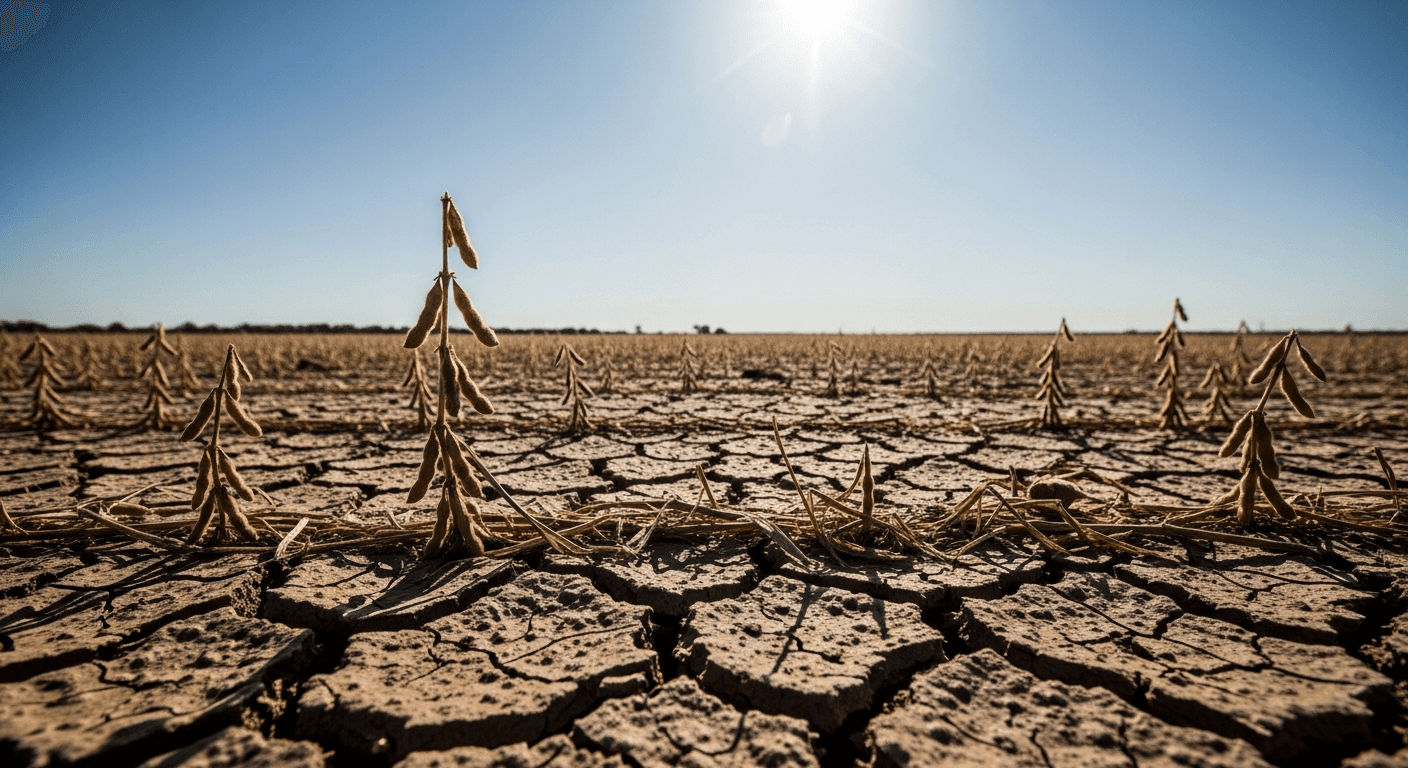
A prolonged dry spell across key Brazilian agricultural states is raising investor concern over soil moisture levels heading into the 2026/2027 soybean planting window, potentially tightening global supply forecasts. The critical Center-West hubs of Sorriso in Mato Grosso (Sorriso-MT) and Rio Verde in Goiás (Rio Verde-GO), along with the western Bahia region (Luís Eduardo Magalhães-BA), have registered seven consecutive dry days and near-zero rainfall over the past week, according to BRZ News analysis of weather data as of today.
The primary risk is not to the current harvest, which concluded months ago, but to the timing and success of the upcoming crop. Since July marks the typical dry season in Brazil's Cerrado biome, this lack of rainfall prevents the necessary recovery of the water table before the official start of the planting season, usually triggered by consistent rains in late September or early October. A delayed onset of the wet season due to low antecedent soil moisture would push back the planting window, increasing the risk of the vital second corn crop (safrinha) being exposed to dry conditions later in its cycle. In Sorriso-MT, the largest soybean-producing municipality in Brazil, rainfall for the last seven days stood at a negligible 1.4 millimeters, while Rio Verde-GO and Luís Eduardo Magalhães-BA registered 0.0 millimeters. Cascavel in Paraná (Cascavel-PR) was marginally better with 17.0 millimeters of rain over the last seven days, but still recorded six dry days.
This Southern Hemisphere weather threat comes as global soybean futures are already consolidating after a recent weather-driven rally largely focused on adverse conditions in the US Midwest earlier in the month. The front-month CBOT soybean futures contract settled at $12.0322 per bushel as of Tuesday, down 0.44% intraday but maintaining significant gains over the last year. The Chicago market's sensitivity to supply-side issues is evident in the latest Commitment of Traders (COT) report, which showed speculative funds holding a substantial net long position of 113,860 contracts (182,923 long versus 69,063 short), demonstrating high exposure to any new supply disruption.
While a near-term weather premium is usually applied to the US crop during its critical growing season, any structural delay in Brazilian planting adds an immediate supportive floor to international soybean prices, directly affecting the price of Brazilian agricultural commodities. Furthermore, the prospect of a lower-than-anticipated crop could negatively influence the outlook for the Brazilian Real (USD/BRL), as agribusiness exports are a major source of foreign exchange inflows.
Investors should monitor the 30-day weather forecast, particularly for the key states of Mato Grosso, Goiás, and Paraná, looking for signals of the início das chuvas—the start of the consistent rains necessary to establish the planting season. The next critical data point will be the soil moisture readings released by local agencies in late August and early September, which will determine if planting delays become a reality for the 2026/2027 soybean season.