
Dry Spell in Key Brazilian Soybean Regions Raises Crop-Stress Risk Ahead of Peak Planting
Week-long drought conditions in Mato Grosso, Goiás, and Bahia introduce volatility risk to CBOT Soybean futures as planting windows open.
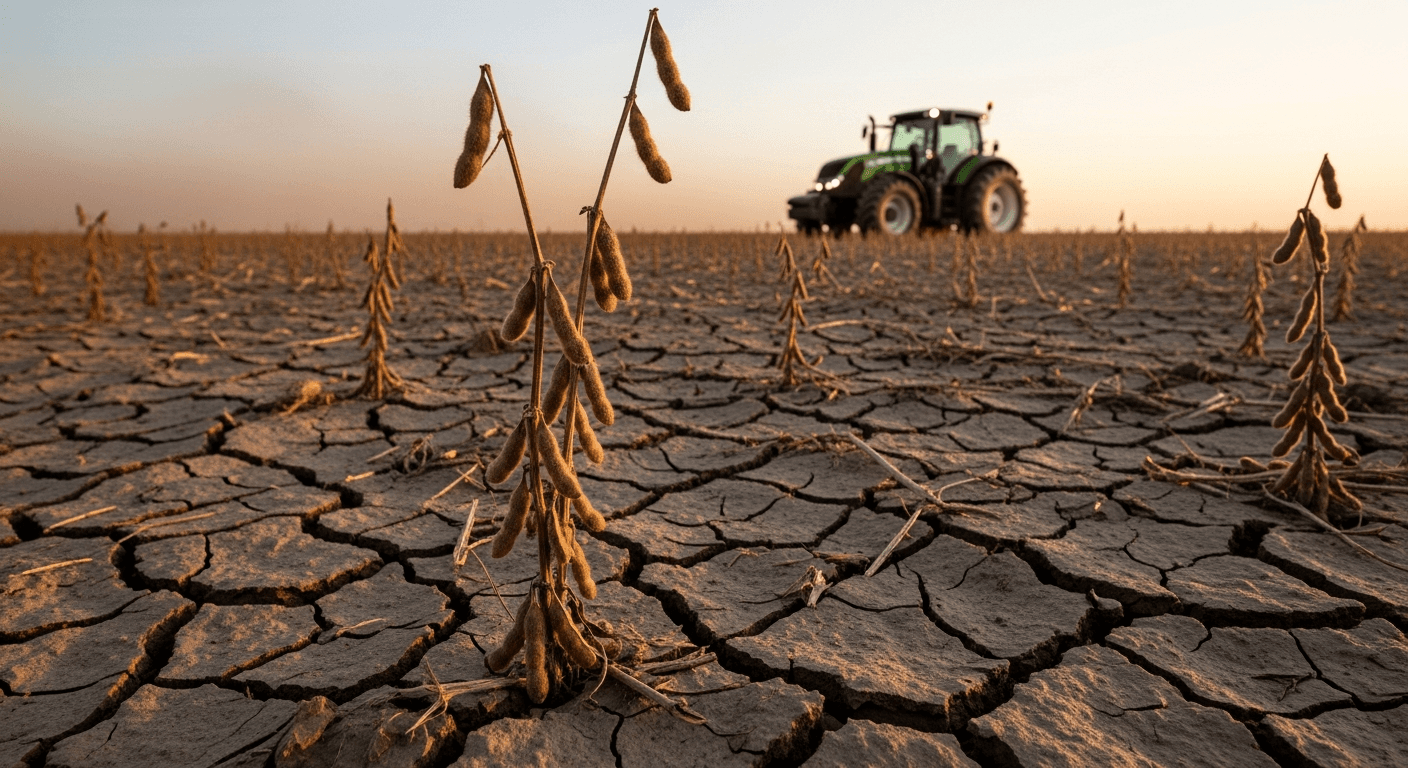
A seven-day dry spell across critical soybean producing regions in Brazil is raising concerns over the start of the 2026/27 planting season, potentially introducing a supply risk premium into global oilseed markets. Major agricultural hubs, including Sorriso in Mato Grosso (MT), Rio Verde in Goiás (GO), and Luís Eduardo Magalhães in Bahia (BA), have all recorded 0.0mm of rainfall over the last seven days, capping a week of dry conditions in each location. This lack of rain comes as the sanitary void periods, which restrict soybean planting, end and farmers prepare to sow the crop that is critical for global supply.
The mechanism for market impact is centered on planting pace and the subsequent safrinha (second crop) corn yield. While planting is typically underway in earnest from late September through October, a reliable start to the rainy season is required for seed germination and successful early-stage growth. Delays in planting, triggered by insufficient soil moisture, compress the overall season and can push back the eventual harvest, consequently narrowing the crucial planting window for the high-value safrinha corn crop that follows the soybeans. The market is currently forecasting another record Brazilian soybean harvest for 2026/27, with some estimates near 183.1 million tonnes, suggesting that any weather-related threat to production would challenge this high base-case assumption.
The weather risk emerges against a backdrop of already bullish speculative positioning. Commodities and Futures Trading Commission (CFTC) data shows large speculators maintain a significant net long position in Soybean futures on the Chicago Board of Trade (CBOT), currently standing at 180,562 long contracts against 56,857 short. This substantial net long position suggests the market is highly sensitive to bearish supply news, meaning that sustained dry weather could trigger aggressive buying as fund managers cover positions, pushing CBOT prices higher. Nearby CBOT soybean futures have been consolidating near 1,190.25 US cents/bushel as of early August, balancing high global supply expectations with persistent U.S. weather uncertainty. In contrast to the dry Center-West, the southern state of Paraná has seen better conditions, with Cascavel recording 50.3mm of rain over the last seven days and only two dry days, highlighting the regionalized nature of Brazil’s agricultural climate.
The immediate factor to watch for investors is the forecast for the return of rainfall to the central states of Mato Grosso and Goiás. If the dry spell persists into the second half of August, it will confirm a delayed start to the wet season and force a downward revision of optimistic production forecasts. Brazilian farmers are poised to begin sowing immediately once sufficient soil moisture is present, making the timing of the coming chuva (rain) the primary swing factor determining soybean price volatility and global supply risk over the next three weeks. Furthermore, the correlation between weather risk and the Brazilian Real (USD/BRL) will be in focus, as any threat to the nation’s largest export crop can weigh on the currency, potentially requiring a portfolio hedge.