
Dry Spell in Brazil’s Soybean Belt Raises Crop Risk Ahead of Planting
Seven-day dry spell in key Brazilian soy regions is depleting soil moisture, threatening to delay the crucial 2026/27 planting window.
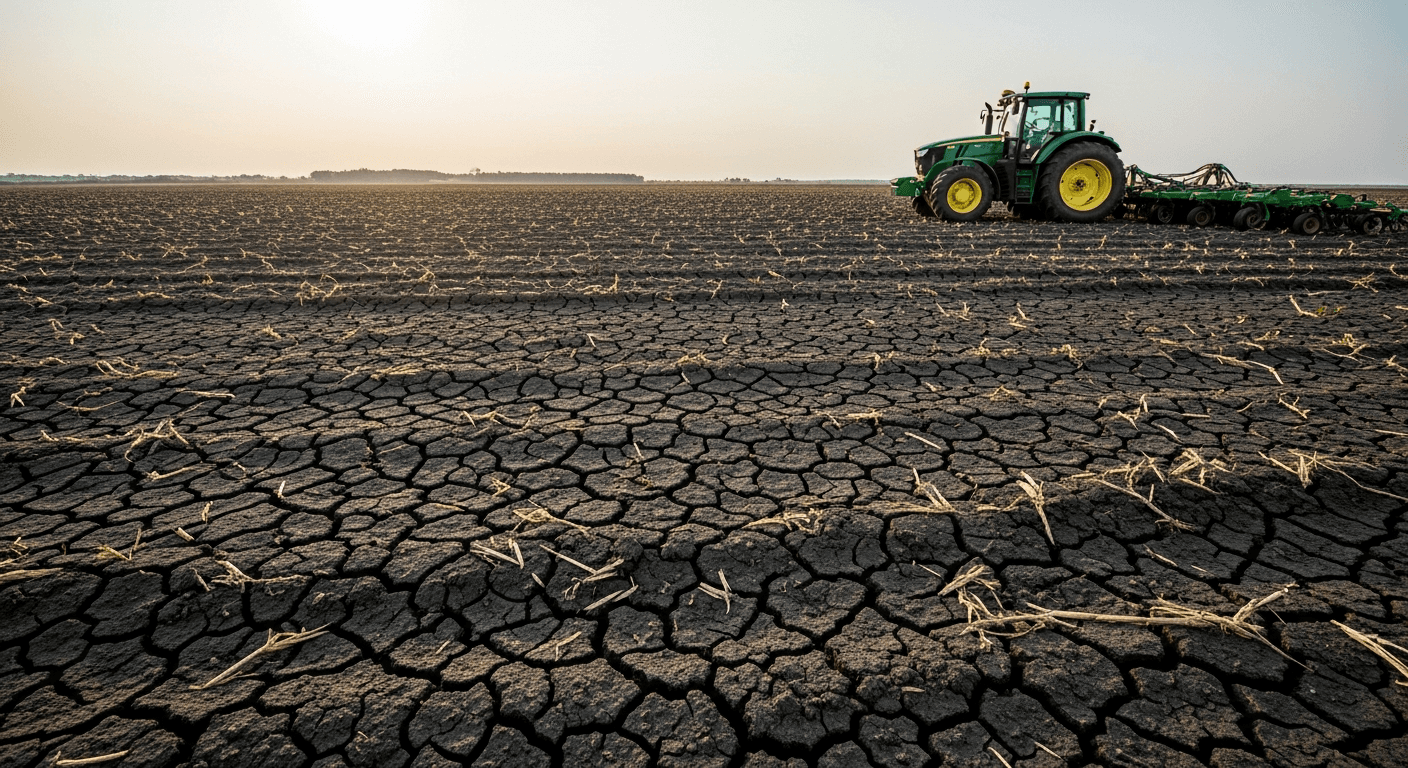
A seven-day dry spell across Brazil’s most productive soybean regions is rapidly depleting critical soil moisture reserves, threatening to delay the start of the country’s 2026/2027 planting season and adding new risk to global supply. Key agricultural hubs, including Sorriso in Mato Grosso (MT), Rio Verde in Goiás (GO), and Luís Eduardo Magalhães in Bahia (BA), have all received effectively zero rain over the last week—Sorriso recorded 0.1mm, while Rio Verde and Luís Eduardo Magalhães logged 0.0mm of rainfall. This pre-season crop stress in the world’s largest soybean exporter comes as the CME Group soybean futures trade at 1176.25 cents per bushel, reflecting global sensitivity to any sign of trouble in South American production.
The risk is not to a standing crop, as the soybean planting season for the 2026/27 cycle has not yet officially begun. Instead, the prolonged dry period during the region's winter off-season directly impacts the volume of water stored in the soil, which farmers need to guarantee successful and uniform germination when planting starts in the coming weeks. Planting into dry soil—or "dusting in"—is a major gamble that often leads to poor stand counts and the costly necessity of replanting. Brazilian growers typically wait until the start of the rainy season is firmly established before committing seed to the ground.
A delayed start to the soybean cycle sets off a ripple of cascading risks across Brazil’s massive double-crop system. The primary concern is that a late soybean harvest compresses the planting window for the highly profitable safrinha (second) corn crop that immediately follows. The safrinha, which is mostly harvested in August, is responsible for the majority of Brazil’s corn exports and is at risk of being planted too late to escape the onset of the next dry season. While the current dry weather is aiding the final stages of the nearly completed safrinha corn harvest in Mato Grosso and the cotton harvest in Bahia, the forward-looking impact on the oilseed's planting schedule is now the market’s primary focus.
The market has already responded to an increasingly volatile weather outlook, which includes the risk of an El Niño event favoring drier conditions in Brazil’s central and northern growing regions. Port prices for soybeans have rallied recently, boosting farmer confidence and accelerating purchases of fertilizer for the upcoming season. However, this early dry spell underscores that the initial forecast for a large 2026/27 crop is highly contingent on timely and abundant rainfall. The next critical date will be the end of the mandatory “sanitary empty” period—a time when no soy is allowed in the field—which expires in mid-September in Mato Grosso, signaling the official start of the planting season, contingent on adequate moisture returning to the soil.
What it Touches The threat of planting delays in the Brazil Soybean belt immediately impacts global soybean futures prices, which are sensitive to weather-driven supply forecasts from the world's top producer. The Brazilian Real is also affected, with the country's currency trading at R$5.0902 to the U.S. Dollar, as agricultural exports—primarily soybeans and corn—are a major source of foreign currency revenue for the Brazilian economy.