
Dry Spell in Brazil’s Center-West Raises Risk for 2026/27 Soybean Planting and Safrinha Corn
Near-zero rainfall in key regions like Sorriso and Rio Verde threatens a delayed start to the next soybean season, potentially hitting safrinha corn.
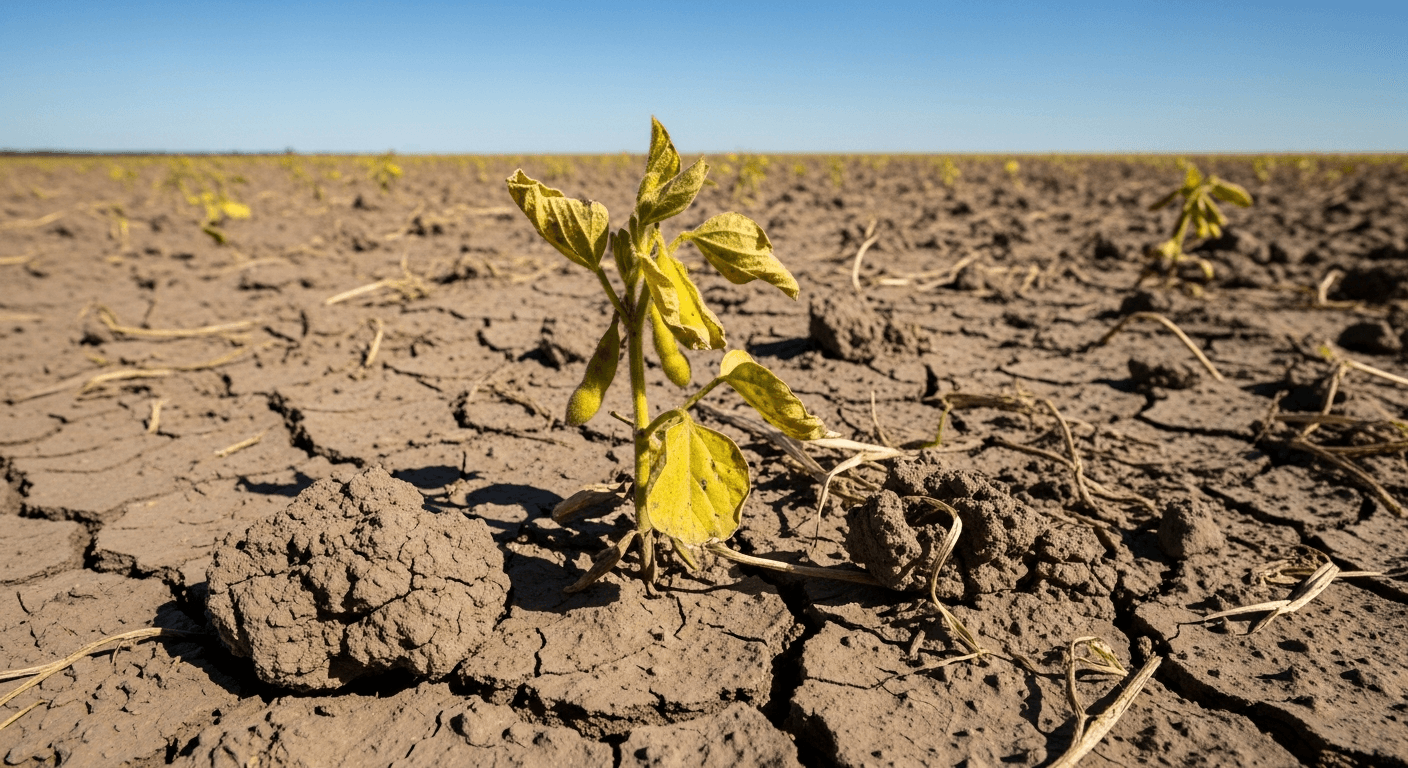
Key Brazilian soybean regions are reporting critically low rainfall, threatening the timely start of the 2026/2027 planting season and elevating crop-stress risk for global investors. Meteorological data confirms a virtual drought over the past week in the heart of Brazil’s largest grain belt, with the important Center-West city of Rio Verde, Goiás (GO), and the top-producing municipality of Sorriso, Mato Grosso (MT), registering 0.0 millimeters (mm) and 1.4mm of rain, respectively, over the past seven days. Luís Eduardo Magalhães, Bahia (BA), in the emerging Matopiba agricultural frontier, also recorded a seven-day deficit of 0.0mm.
The rainfall deficit occurs during a critical pre-season period where soil moisture must be replenished ahead of the official planting window, which typically opens in late September and October in the Center-West. The mechanism for market concern is two-fold: a delayed start to the soybean crop, and the knock-on effect on safrinha corn. Farmers in states like Mato Grosso and Goiás cannot plant the main soybean crop until sufficient moisture is available. Any delay in the soybean calendar compresses the window for planting the subsequent safrinha (second crop) corn, which must be planted early enough to avoid the region’s dry season beginning in May. This tightly linked double-cropping system—crucial to Brazil’s global commodity dominance—means weather stress now directly affects the production outlook for two major grains. Paraná’s Cascavel, in the Southern region, was the outlier, recording 17.0mm over six dry days, providing some localized relief compared to the northern states.
The immediate supply shock risk posed by poor initial planting conditions is likely to amplify volatility in global agricultural markets, which are already showing signs of speculative positioning. Commitments of Traders (COT) data for soybeans currently shows a high net long position of 113,860 contracts, indicating a strong speculative base ready to bid up prices on any negative supply news emanating from Brazil, the world’s largest soybean exporter. Separately, the Brazilian real is trading around 5.11 to 5.13 per U.S. Dollar (USD BRL), meaning that while currency strength is not currently boosting input costs (which are priced in U.S. dollars), supply disruptions remain the overwhelming market driver.
For investors following Brazilian agribusiness listed on the B3 or via the Brazil ETF (EWZ), the upcoming weeks of weather forecasts will be critical. The next major event to watch is the end of the Vazio Sanitário (sanitary void, a mandatory planting-free period to control pests), which is usually followed closely by the start of planting. If the Center-West does not receive heavy, consistent rainfall in August, the market should anticipate an official delay in the 2026/2027 soybean calendar, directly raising the production risk for the high-value safrinha corn crop that will follow.