
Dry Spell in Brazil Soybean Belt Raises Crop-Stress Risk
Severe dry spells across Brazil's key soybean regions threaten yields, risking a tighter global supply that could impact B3 stocks and the USD/BRL rate.
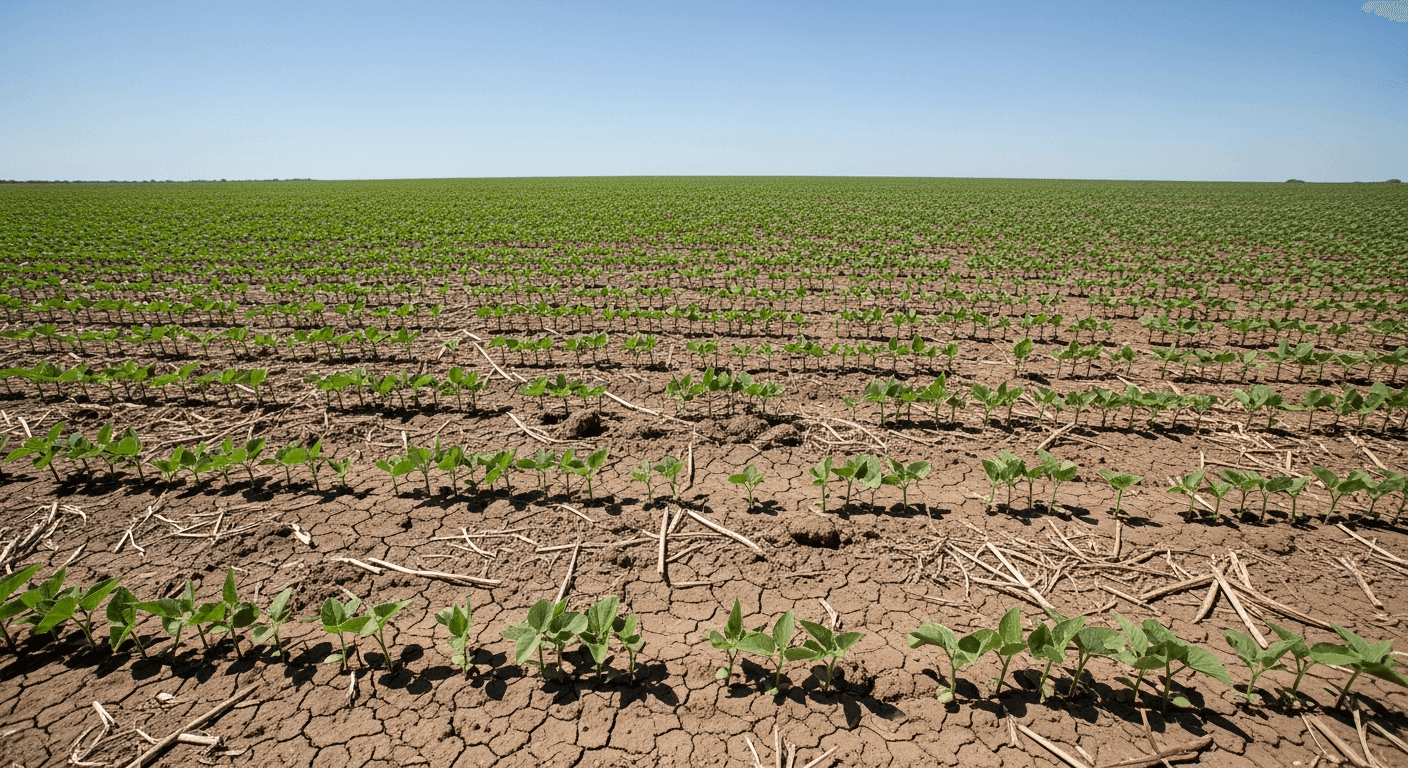
A deepening dry spell across Brazil's primary agricultural heartland is raising crop-stress risks and threatening to disrupt the outlook for the upcoming harvest. Key production hubs are experiencing prolonged periods without rainfall, raising concerns over soil moisture levels ahead of the planting season. In Sorriso (Mato Grosso), the country's leading soybean-producing municipality, weather stations recorded 7 consecutive dry days with a meager 0.9 mm of cumulative rainfall. The situation is equally critical in Rio Verde (Goiás) and Luís Eduardo Magalhães (Bahia), both of which registered 7 dry days and absolute zero precipitation (0.0 mm). Meanwhile, Cascavel (Paraná) logged 5 dry days with 18.7 mm of rainfall, offering only minor relief to the southern belt.
This severe lack of moisture acts as a direct catalyst for global commodity markets. As the world's largest exporter of soybeans, any threat to Brazil agribusiness yields immediately triggers supply-side anxieties. If soil moisture is not replenished, planting delays could compress the development window, capping overall yield potential. This supply-tightening mechanism historically drives Chicago Board of Trade (CBOT) futures higher, which in turn influences local export premiums and domestic pricing. Speculative positioning is already highly active; the latest Commitment of Traders (COT) data shows soybean market participants holding 182,923 long contracts against 69,063 short contracts, reflecting a heavily bullish bias. For comparison, COT corn positions stand at 492,996 longs to 305,646 shorts, while COT coffee positions sit at 52,395 longs to 25,140 shorts.
For global investors looking to invest in Brazil, these localized weather patterns have broad macroeconomic consequences. Agricultural exports are a primary driver of Brazil's trade balance and foreign currency inflows. A compromised soybean crop can weaken the country's trade surplus, directly impacting the Brazilian real forecast and driving volatility in the USD BRL currency pair. On the equity side, agricultural performance heavily influences B3 stocks and major indices. Volatility in crop yields often ripples through the iShares MSCI Brazil ETF (EWZ), which tracks large- and mid-sized Brazilian equities, as well as major logistics, fertilizer, and banking stocks listed on the local exchange.
Going forward, market participants must closely monitor medium-range weather forecasts for the Center-West and Southern regions to see if spring rains arrive in time for early planting. Investors will also be watching how these environmental pressures affect the financial health of major Brazilian ADRs and agribusiness players. If the dry spell persists, the resulting crop stress could force analysts to trim their production estimates, shifting the supply-demand balance and reshaping global commodity flows for the remainder of the season.