
Dry Spell Grips Key Brazil Soybean Regions, Fueling Commodity Price Risk
Water stress in core Brazilian states is increasing crop-supply risk, pushing soybean futures higher.
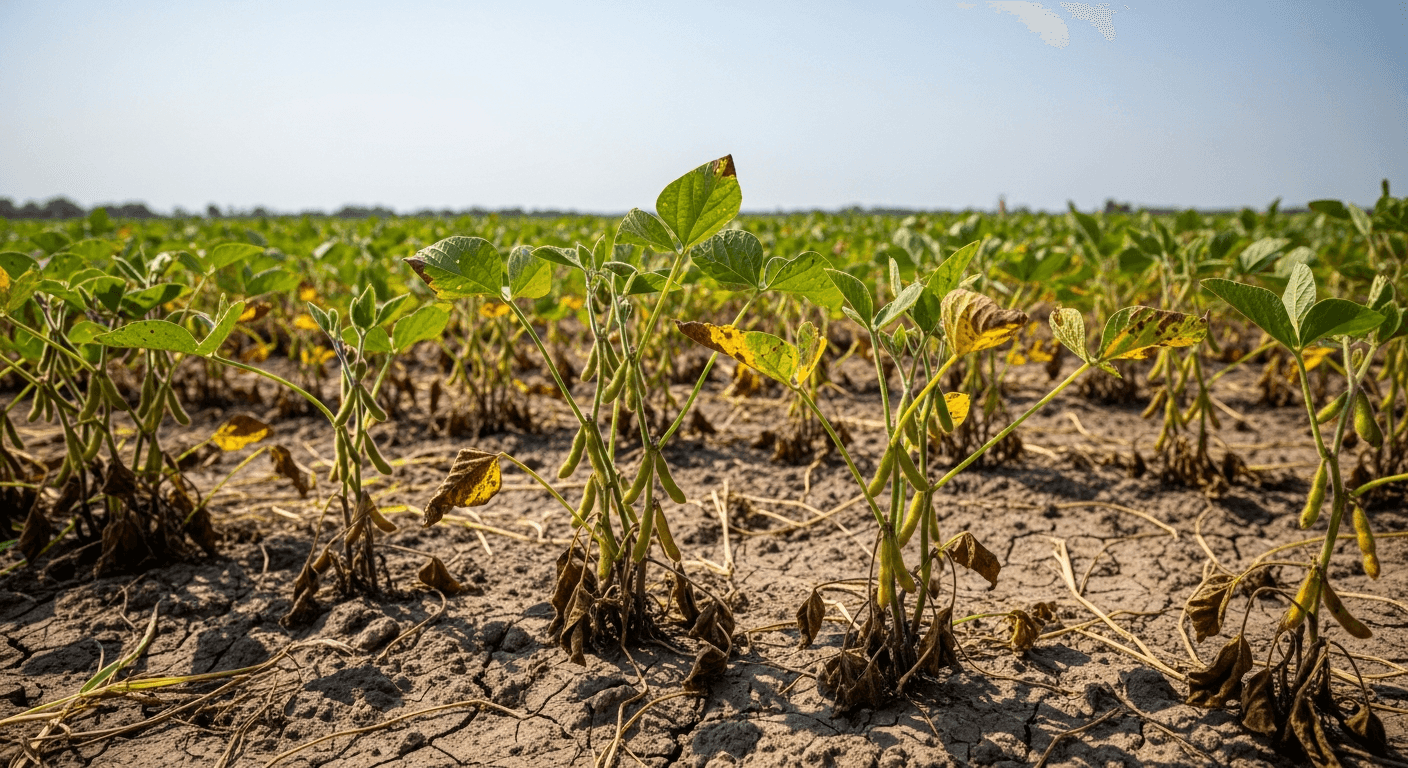
A deepening dry spell in four of Brazil’s most vital soybean-producing regions is elevating concerns over the nation’s crop outlook, directly translating into increased bullish pressure on global soybean futures. The water deficit, which has spanned up to seven consecutive days in some areas, comes as investors already hold a significant net long position in the commodity, signaling sensitivity to supply tightening. The Real, meanwhile, traded firmer today, with the USD/BRL rate sitting at R$5.0846, a headwind for exporters who would otherwise benefit from a price rally.
The risk of water stress is most pronounced in central and northeastern growing areas, with Sorriso, Mato Grosso (MT), and Luís Eduardo Magalhães, Bahia (BA), reporting seven consecutive dry days with virtually no rainfall in the last week (0.2mm and 0.0mm, respectively). Rio Verde, Goiás (GO), a major center for agricultural commodities, also logged seven dry days with a reported 0.0mm of rain over the past week. Even in the typically wetter south, Cascavel, Paraná (PR), registered five dry days with minimal weekly precipitation of 10.6mm. This sustained lack of moisture in key production hubs risks stressing the crop during crucial developmental phases, a factor that historically precedes yield reductions and market-moving volatility.
The market’s reaction to a tightening supply outlook is reflected in the latest investor positioning. Managed money accounts held a substantial net long position in CBOT soybean futures, with 182,923 long contracts contrasting with 69,063 short contracts. This strong conviction among institutional investors suggests a collective view that global soybean supply, heavily reliant on Brazil, faces headwinds, making the contracts vulnerable to weather-driven news. The expectation of lower yields in a major exporting nation like Brazil tends to reduce the supply buffer, prompting speculative buying and pushing prices higher, as seen in recent trading sessions.
For Brazilian agribusiness and investors following the B3, the commodity's upward price movement due to dry weather is partially offset by the Real’s recent appreciation. The USD/BRL pair has fallen 0.26% today, extending its strengthening trend over the past month. A stronger domestic currency reduces the Real-denominated revenue received by Brazilian farmers and exporters for dollar-priced goods like soybean, mitigating the financial benefit of the international price rally. The net effect is a mixed outlook, with higher global prices signaling physical supply risk, but a stronger Real suppressing local profit margins.
Investors will be closely watching for any shift in the long-range weather forecasts, with a return to consistent rainfall being the immediate signal to watch. The next major catalysts will be the updated crop production forecasts from both the USDA and Brazil’s National Supply Company (CONAB), with new estimates expected in August. These reports will provide the first material and verifiable assessment of how the recent dry conditions have impacted the country's overall production figures.