
Drought Threatens Soil Moisture for 2026/27 Brazil Soybean Planting in Key Regions
Prolonged dry spell in Brazil’s Cerrado is raising concerns for the upcoming soybean planting season, lifting CBOT futures.
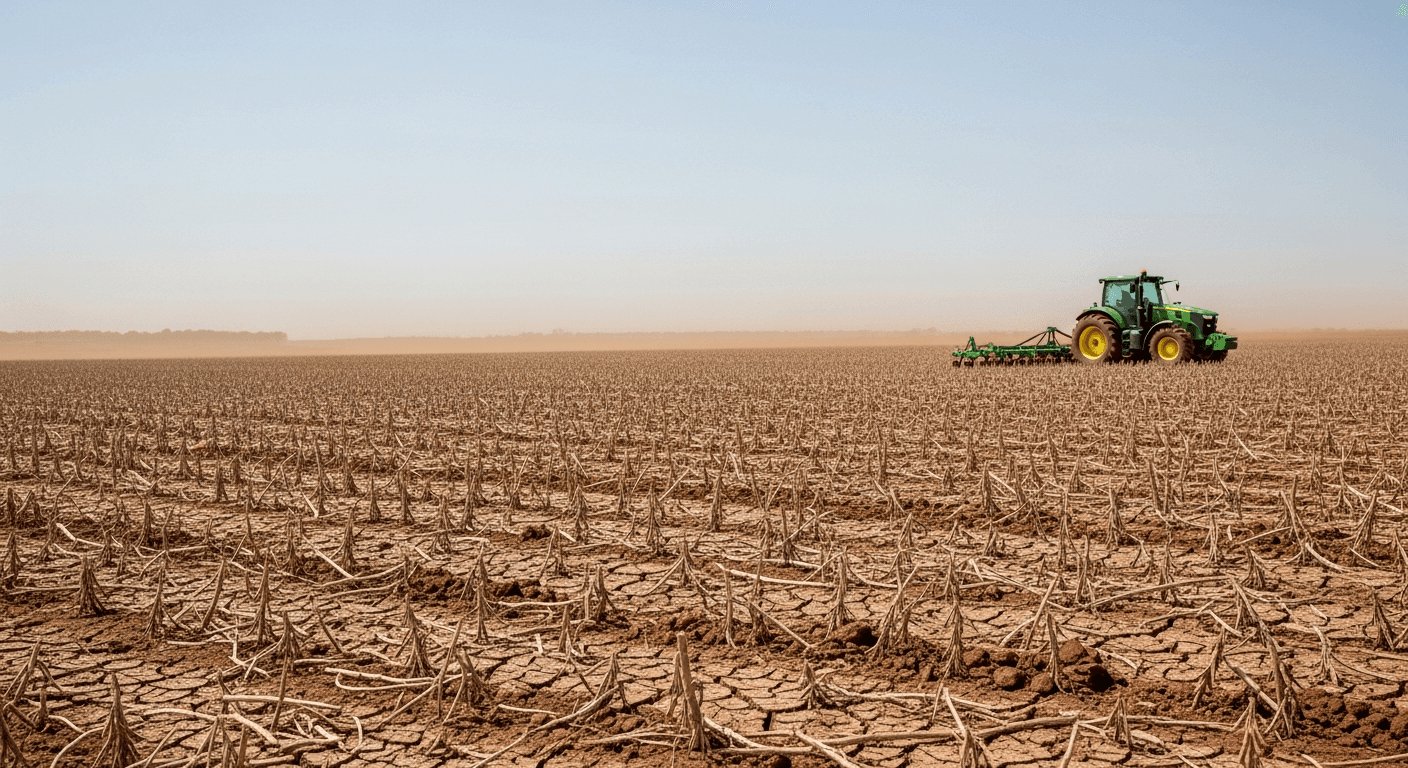
A prolonged dry spell in Brazil’s central grain belt is raising concerns about soil moisture levels ahead of the official 2026/2027 soybean planting season, lifting prices on the Chicago Board of Trade (CBOT). Key agricultural hubs, including Sorriso in Mato Grosso (MT), Rio Verde in Goiás (GO), and Luís Eduardo Magalhães in Bahia (BA), have all recorded zero rainfall over the last seven days, marking a full week of dry weather in the regions that produce a significant portion of Brazil's massive soybean crop.
The lack of rain, particularly at the end of July which is the tail end of the dry season, creates a material risk for the upcoming crop cycle. While the primary soybean planting window in the Cerrado typically begins in September and October, adequate subsoil moisture is crucial to ensure a timely start. Delays in planting risk pushing the harvest window later, which in turn compresses the timeline for the second-crop safrinha corn and exposes the overall crop to greater weather variability, including the forecast El Niño-related irregularities. For investors, this uncertainty directly impacts the country's ability to achieve another record output, especially since the 2026/2027 forecast already projected only a modest 0.9% area expansion due to high costs and caution.
The market is pricing in this heightened supply risk. The benchmark November 2026 CBOT soybean futures contract, which prices in the new Brazilian crop, is trading at approximately 1,220.00 US cents per bushel, reflecting global sensitivity to South American crop conditions. This upward price pressure on the commodity is partially offset for Brazilian producers selling to the export market by the Brazilian Real (BRL), which is currently trading at approximately R$5.1300 to the U.S. Dollar. While the strong Real tempers the local currency value of dollar-denominated soybean sales, the sustained price strength on the CBOT indicates that global supply anxieties are outweighing the strong currency effect. Financial speculators appear to be taking a clear position on the downside risk, with the latest Commitment of Traders (COT) report showing long positions in soybean futures outweighing short positions by more than 113,000 contracts (182,923 long versus 69,063 short).
The dry conditions are not uniform across the country. In contrast to the zero precipitation recorded in the Center-West and Northeast hubs of Sorriso, Rio Verde, and Luís Eduardo Magalhães, the southern state of Paraná is in a better position, with Cascavel reporting 8.3mm of rain over the last seven days. However, the Center-West, anchored by Mato Grosso, remains the dominant force in the country's agribusiness landscape.
The immediate next data point for investors to watch is the August rainfall accumulation in the Cerrado, which will directly influence the farmer's decision-making on the planting timetable for the new season. Any extension of the current drought into August could necessitate a greater delay in the official planting window and exert further upward pressure on CBOT soybean futures. The market will also be watching the Copom decision on August 4-5th for any move on the Selic rate, which could shift the USD/BRL rate and further impact export competitiveness.