
Drought Deepens Risk for Brazil’s Next Soybean Planting Window in Key Cerrado Hubs
Week-long dry spell depletes soil moisture in central Brazil, threatening the 2026/27 soybean planting schedule.
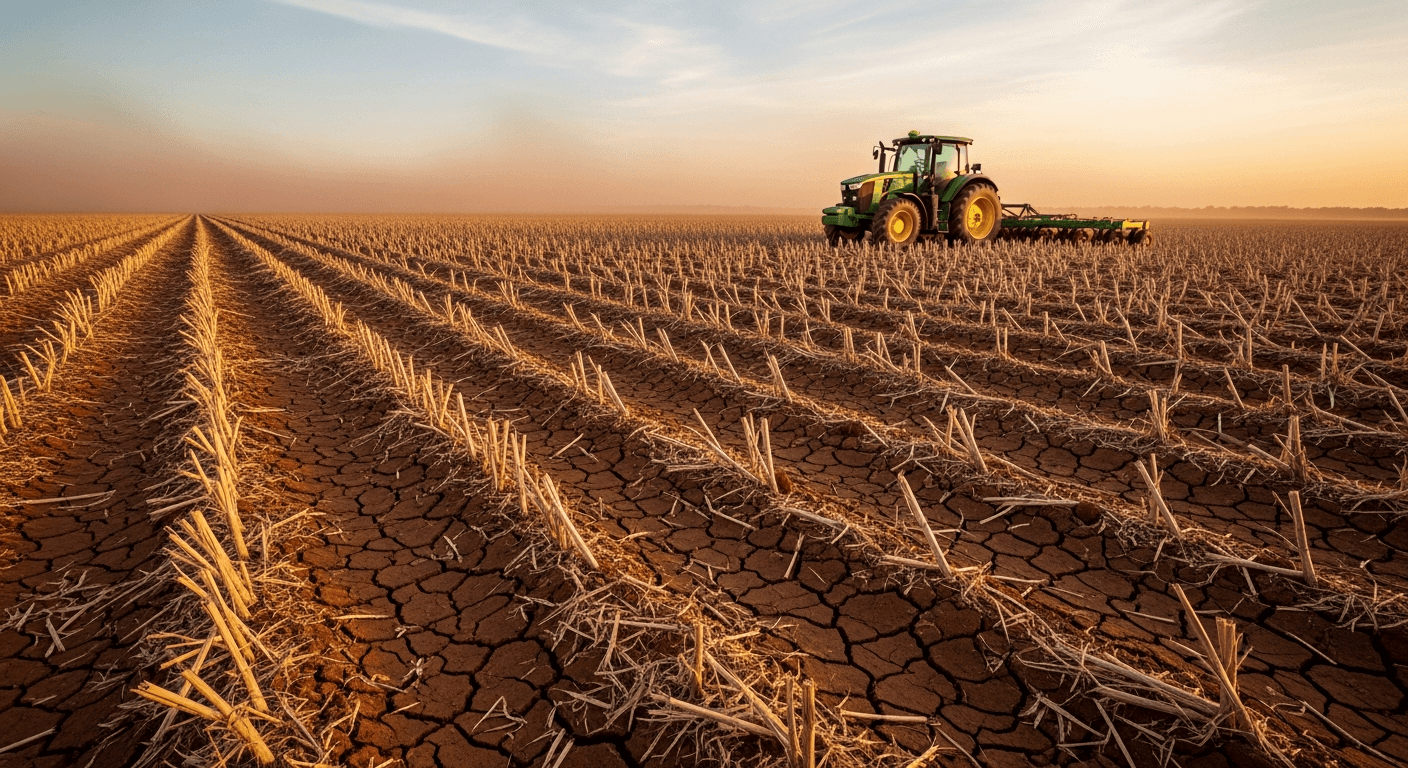
Key agricultural hubs in Brazil’s Cerrado region are experiencing a severe, prolonged dry spell, raising investor concern over the critical pre-planting soil moisture levels for the 2026/2027 soybean crop. Municipalities central to the country’s grain output, including Luís Eduardo Magalhães in Bahia and Rio Verde in Goiás, have registered zero measurable rainfall (0.0mm) over the last seven days, marking seven consecutive dry days and signaling a potential delay to the start of the crucial planting window. This hydrological stress comes at a moment when the global market is already looking for certainty in the world’s largest soybean producer, with any threat to the harvest likely to impact futures pricing.
The persistent lack of rain directly impacts the soil’s capacity to support the next crop cycle, which typically sees the first soybean seeds going into the ground in late September or early October following the end of the dry season. In Sorriso, Mato Grosso—widely known as the world’s grain capital—the situation is only marginally better, with just 0.9mm of rain recorded over the same seven-day period. This dry start is more than a short-term weather event; it risks a compressed and potentially delayed planting window for the soybean crop, which forces a later harvest and, critically, pushes the subsequent high-value safrinha corn crop further into the dry season, increasing its own yield risk. These regions are foundational to Brazil agribusiness, producing massive volumes of both soy and corn.
This weather risk is adding upward pressure to an already bullish commodity market. Managed money funds are positioned net long in CBOT soybean futures by a significant margin (182,923 long contracts against 69,063 short contracts), suggesting sentiment is primed for a tightening supply outlook. While the U.S. harvest is still facing its own weather-related risks, the compounding threat from Brazil's dry start reinforces the perception that global supply buffers will remain thin. Furthermore, any disruption to Brazil’s agricultural exports could add volatility to the Brazilian real (USD/BRL), as the country's massive commodity trade surplus is a key underpinning for the currency.
While Cascavel in Paraná to the south registered 18.7mm of rain over the last seven days, illustrating better conditions in that state, the critical production volumes come from the central regions now grappling with the drought. The market is now focused squarely on the weather forecast for the coming weeks and the official opening of the 2026/2027 planting window. Investors should monitor meteorological predictions for the transition from the dry winter to the wet summer season, as an early, consistent arrival of rain will be necessary to ensure a timely and successful start to the planting of the next record soybean crop. A continued dry forecast through September will increase the likelihood of price volatility in Chicago futures.