
Delayed Brazil Coffee Harvest Sparks Global Price Surge
Slow progress in Brazil's 2026/27 coffee harvest and rain-related quality concerns tighten global supplies, driving Arabica and Robusta futures higher.
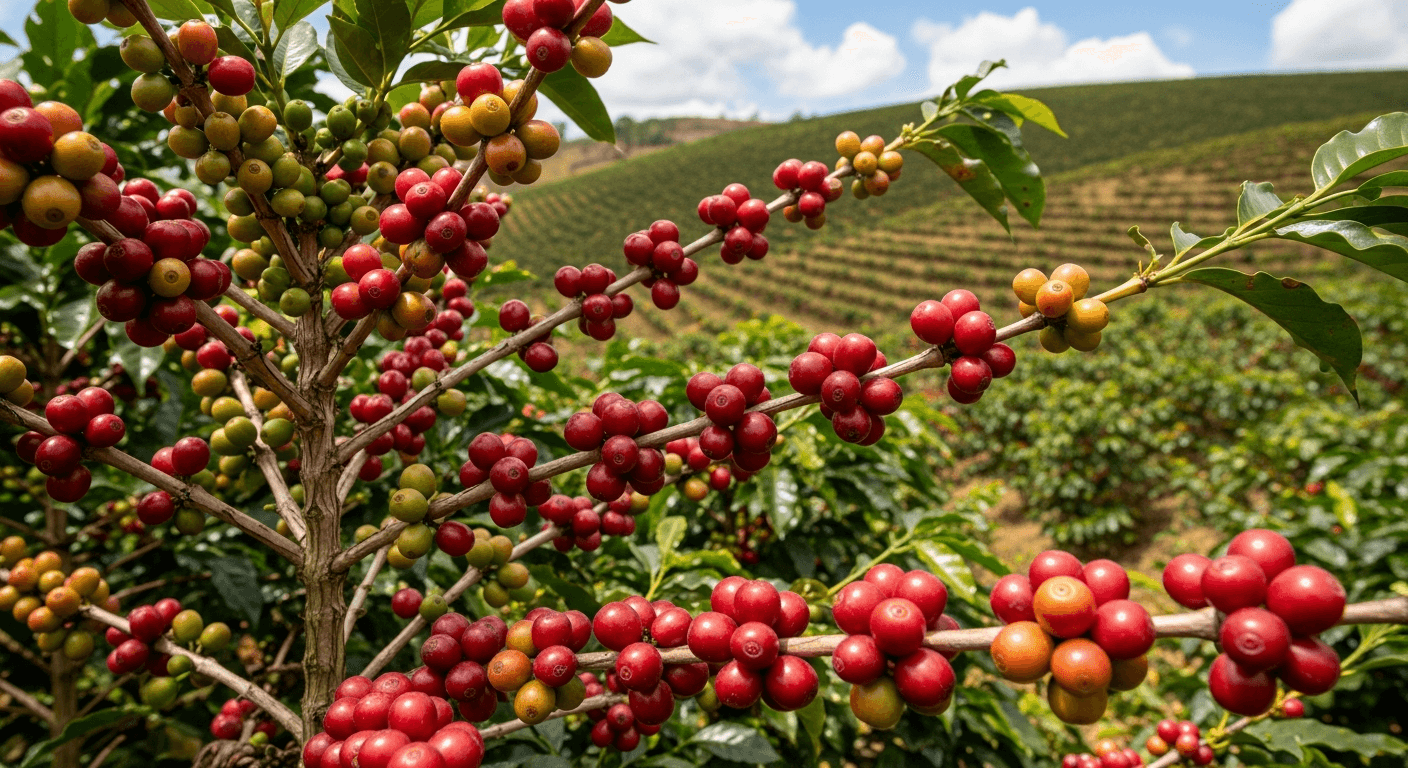
Global coffee futures rose sharply on July 17, 2026, as a lagging harvest in Brazil tightened immediate supplies and raised localized crop quality concerns. September Arabica coffee futures (KC1!) on the Intercontinental Exchange (ICE) closed up 2.46% at 320.30 cents per pound, while London Robusta futures (RC1!) climbed 2.11% to $3,877 per ton. The price surge reflects growing market anxiety over slow field progress in the world's largest coffee producer, which has prompted local farmers to hold back on sales.
According to data from Safras & Mercado, Brazil's 2026/27 coffee harvest reached 64% completion as of July 15. This progress significantly trails the 77% completion rate recorded during the same period last year, as well as the five-year historical average of 70%. Unseasonable rains in key growing regions, including Minas Gerais and São Paulo, have repeatedly disrupted field drying and slowed down machinery, fueling concerns over bean quality.
The slow harvest pace comes at a time of heightened vulnerability for global inventories. ICE Arabica coffee inventories fell to a 2.25-year low of 332,945 bags on July 17. While the USDA has forecast a large overall 2026/27 Brazil agribusiness crop of 71.9 million bags, the immediate bottleneck in getting beans to port is keeping near-term physical supplies exceptionally tight. The latest Commitment of Traders (COT) data highlights the speculative interest in the sector, with coffee net-long positions standing at 53,913 contracts against 26,086 short positions.
Currency dynamics are also playing a critical role in the pricing of Brazilian agricultural exports. A strengthening Brazilian real against the U.S. dollar (USD BRL) has discouraged local producers from selling their coffee on international markets. Because global commodities are priced in dollars, a stronger real reduces the local currency returns for Brazilian farmers, giving them further incentive to hold onto their current stocks until prices rise higher.
Meanwhile, weather patterns across other major agricultural zones in Brazil remain mixed. While coffee regions grapple with excess moisture, key grain-producing areas are experiencing prolonged dry spells. According to recent regional data, Rio Verde (Goiás), Luís Eduardo Magalhães (Bahia), and Sorriso (Mato Grosso) all reported 0.0 mm of rain over the last seven days, marking seven consecutive dry days in each area. Conversely, Cascavel (Paraná) received 45.1 mm of rain with only four dry days, underscoring the highly localized weather disruptions currently impacting Brazilian agriculture.