
Corn Prices Face Volatility Ahead of Critical USDA Acreage Report
Corn futures experience sharp price adjustments amid Brazil's safrinha harvest pressure and highly anticipated USDA planted area data.
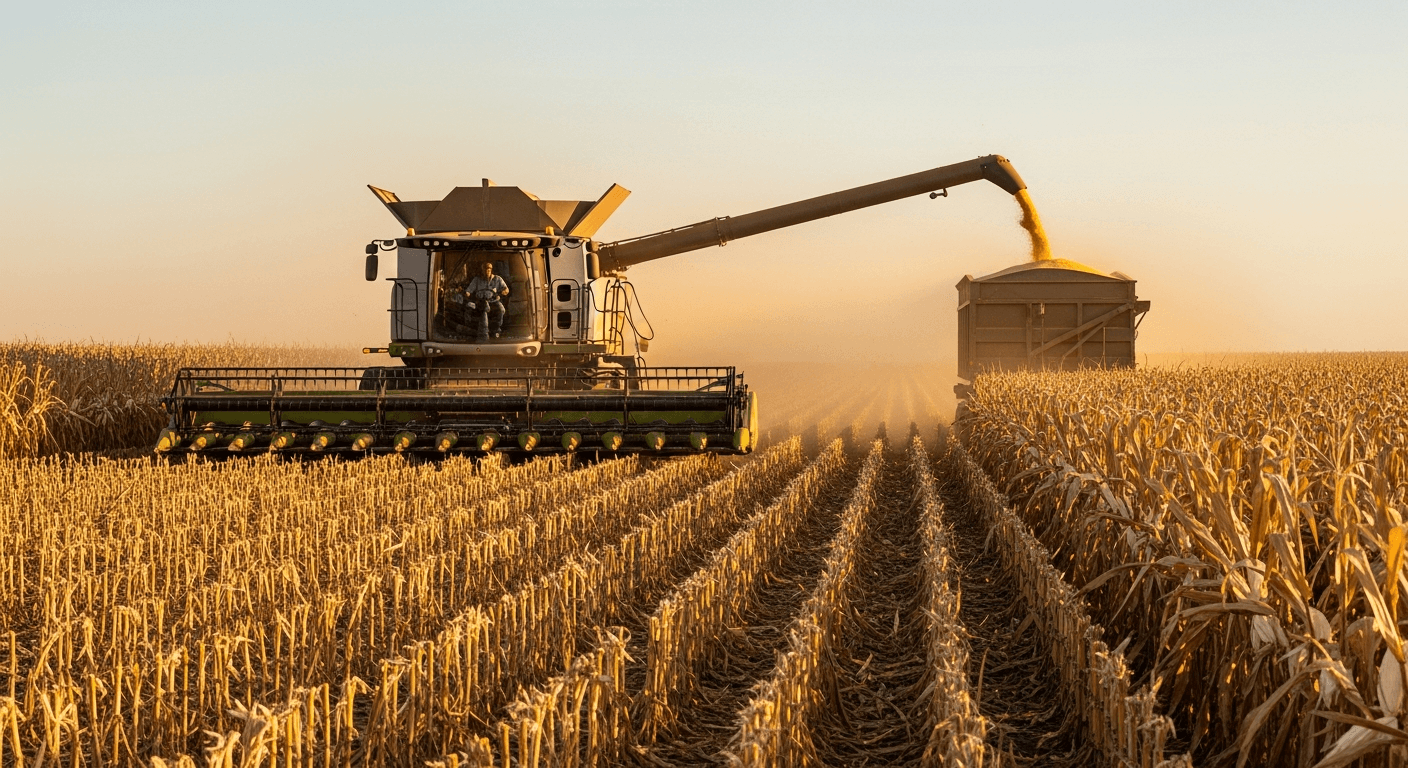
A combination of peak domestic harvest pressure in South America and highly anticipated U.S. government data is triggering sharp price adjustments for global corn futures. Market participants are positioning themselves ahead of the U.S. Department of Agriculture (USDA) Planted Area and Quarterly Grain Stocks reports, scheduled for release today, June 30, 2026. Analysts anticipate the reports could reveal a shift toward soybean acreage due to high fertilizer and input costs earlier this spring.
In Brazil, the physical market is grappling with immediate supply pressure as the safrinha (second crop) harvest accelerates. In the key agricultural state of Mato Grosso, the safrinha corn harvest has surpassed 35.5% of the seeded area, flooding local markets and putting downward pressure on spot prices. Despite this localized harvest pressure, the B3 corn contract (CCM_FUT) closed up slightly at R$ 64.29 per bag, diverging from Chicago’s 1.20% weekly drop. This domestic resilience is increasingly supported by Brazil's rapidly expanding corn-ethanol industry, which now consumes nearly 20% of the country's total corn output.
Weather conditions across Brazil's agricultural heartland remain highly polarized, influencing local crop development and logistics. According to the latest regional data, key production hubs are experiencing prolonged dry spells, with Sorriso (Mato Grosso), Luís Eduardo Magalhães (Bahia), and Rio Verde (Goiás) all recording 0.0 mm of rain over the last seven days and counting seven consecutive dry days. Conversely, Cascavel (Paraná) registered 26.9 mm of rain with only three dry days over the same period.
On the financial front, market sentiment is reflected in the latest Commitment of Traders (COT) data, which shows managed money holding 520,962 long positions versus 462,629 short positions in corn. For comparison, the soybean COT stands at 19,958 longs and 1,000 shorts, while coffee sits at 54,475 longs and 39,422 shorts. As traders digest the upcoming USDA figures, the interaction between South American harvest volumes and U.S. acreage revisions will remain the primary driver of volatility for the USD/BRL and agricultural contracts on both the B3 and the Chicago Board of Trade.