
China’s Food Security Push Poses Systemic Risk to Brazil’s Commodity Exports
Beijing's new five-year plan for self-sufficiency introduces the threat of steep surtaxes and quotas on Brazilian soy and beef volumes.
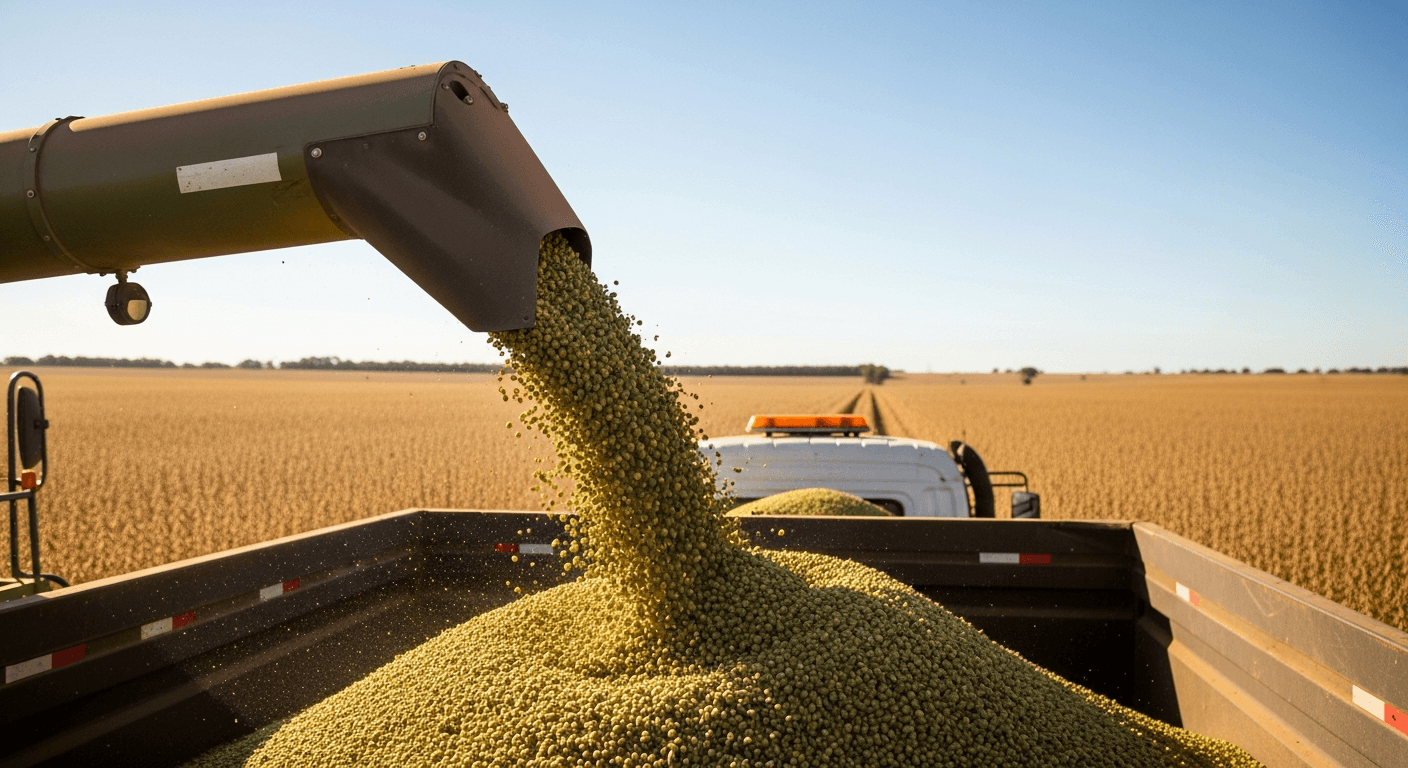
China’s drive for greater food self-sufficiency under its new 2026-2030 five-year plan introduces a systemic risk to Brazil’s massive commodity export machine, particularly for soy and beef, by threatening to impose steep quotas and surtaxes on foreign volumes. Beijing’s strategy aims to reduce external dependency and achieve stability in domestic production, a move that could potentially curb Brazil’s estimated $50 billion to $60 billion in annual agricultural exports to its largest trading partner. The most immediate threat to agribusiness margins is the plan by China’s Ministry of Commerce (Mofcon) to apply surtaxes of up to 55% on imported volumes that exceed rigid, pre-set quotas, according to a recent analysis.
The new policy elevates food security to a matter of national security and lays out a clear roadmap for the world’s largest agricultural importer to become an agricultural powerhouse. Central to the plan is securing grain production capacity, with a target of approximately 725 million tonnes by 2030, a slight increase from current record levels. China is also aiming for 85% independence in seed production. While these are ambitious domestic goals, Brazilian analysts note that China's severe geographical constraints—it possesses only 8% of the world's arable land and 6% of its freshwater resources—mean it will remain structurally reliant on foreign suppliers for high-volume products like soybeans and beef.
Brazil is deeply exposed to the policy shift, as China is the top global destination for nearly all of the country’s main agricultural exports, including more than 70% of its total soy shipments and over half of its beef. A conservative scenario from one consultancy suggests that China could cut its soybean imports by 25% by 2030, which could reduce Brazil’s export volume by 10 million to 20 million tonnes, costing the country up to $20 billion annually. The mere introduction of a low-tariff quota system for beef, which has already been implemented, signals a hardening of Chinese purchasing policy that is expected to spread to other commodities.
However, the shift also presents a dual opportunity for Brazilian agribusiness. Experts suggest that as China's rising middle class demands safer, higher-quality, and more nutritious products, a new market is opening for premium goods. This could favor higher-value Brazilian products such as specialty coffees, which currently trade at R$1,794.15 per 60kg bag for Arabica, compared to the less than $12 per bushel soybean price (1194.5 ¢/bu). To mitigate the systemic risk, Brazilian exporters are being urged to immediately raise their compliance standards, diversify markets, and position for a future where China prioritizes quality and stability over sheer import volume.
What it touches The risk of volume cuts directly impacts the Brazilian Protein Sector and Soy/Grains producers, potentially pressuring prices for commodities like Live Cattle (currently trading at R$346.75 per arroba in the domestic market). The continued uncertainty in the country’s largest export channel adds friction for the Brazilian Real, which is trading at R$5.223 to the U.S. Dollar today.