
Brazil’s Record Soybean Volume Projection Signals Logistical Strain and Yield Risk for 2026/27 Harvest
Brazil’s soy sector is forecasting record production near 180.1 million tons, but minimal area growth flags a major infrastructure challenge.
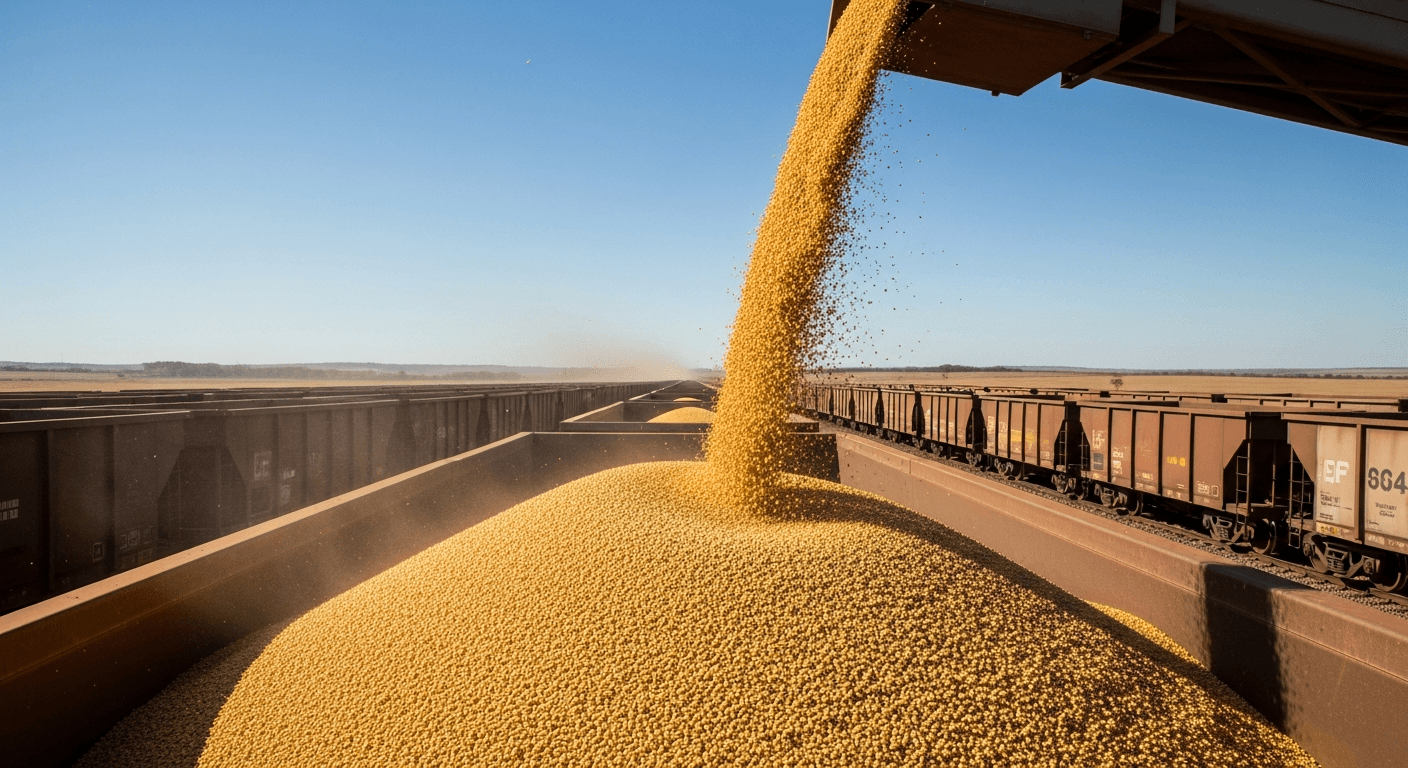
Brazil’s soybean production for the 2026/27 cycle is projected to reach a record 180.1 million metric tons, an increase that will pressure the country’s logistical capacity while raising the stakes on crop yield dependability. Consultancy Safras & Mercado projects the massive volume as the foundation for the coming season. The corresponding export volume is expected to approach 117 million tons, based on forecasts from the National Supply Company (Conab) and the U.S. Department of Agriculture (USDA), a level that would establish another historical high for the world’s largest soy exporter. The key friction point for investors is the forecast for planted area expansion, which at just 1.2%, is expected to be the smallest annual advance in two decades.
The near-stagnant area growth, which is significantly constrained by tight profit margins for producers and persistently high input costs, means the 2026/27 crop relies heavily on superior yields to hit the record production target. This dynamic elevates climate risk, a concern Safras & Mercado highlighted given the potential for El Niño or La Niña effects during the critical planting and development stages. Meanwhile, the immense volume of oilseeds passing through the system will test the capacity of Brazil’s internal logistics, particularly the aging road and rail networks (RAIL) leading to ports in Paranaguá and Santos. A failure to move the bumper crop efficiently could lead to higher domestic freight costs and potential export delays, pressuring margins for traders and exporters.
The forward volumes are underpinned by strong market fundamentals. International demand, primarily from China, remains robust, and domestic crush volumes are set to rise due to increased use of soy oil for biodiesel. Speculative positioning confirms the market’s conviction in the continued strength of the commodity (SOYA); Commitment of Traders (COT) data shows a significant net long position in soybean futures, currently standing at 113,860 contracts. For Brazil’s exporters, a weaker Brazilian Real against the U.S. Dollar (USD/BRL) continues to enhance competitiveness, effectively lowering the global cost of Brazilian-origin soy despite the logistical bottlenecks.
Current weather conditions in the heart of Brazil’s farm belt underscore the yield risks. Key producing regions are currently experiencing dry spells, with Sorriso-MT and Rio Verde-GO reporting seven consecutive dry days and minimal rainfall over the past week, a trend which highlights the reliance of the sector on timely, sufficient rainfall for planting and crop development. The market will closely monitor initial government data prints and further updates from Conab and the USDA in the coming months, which will confirm whether the required yield rates are achievable, and more specifically, the flow of capital into logistics and rail infrastructure projects needed to carry the record harvest.