
Brazil’s Record Harvests Buffer Global Food Prices Against ‘Super El Niño’ Drought in Asia
Near-record Brazilian soy and corn output is stabilizing global supply chains as the intense El Niño phenomenon dries out crops in Asia and Australia.
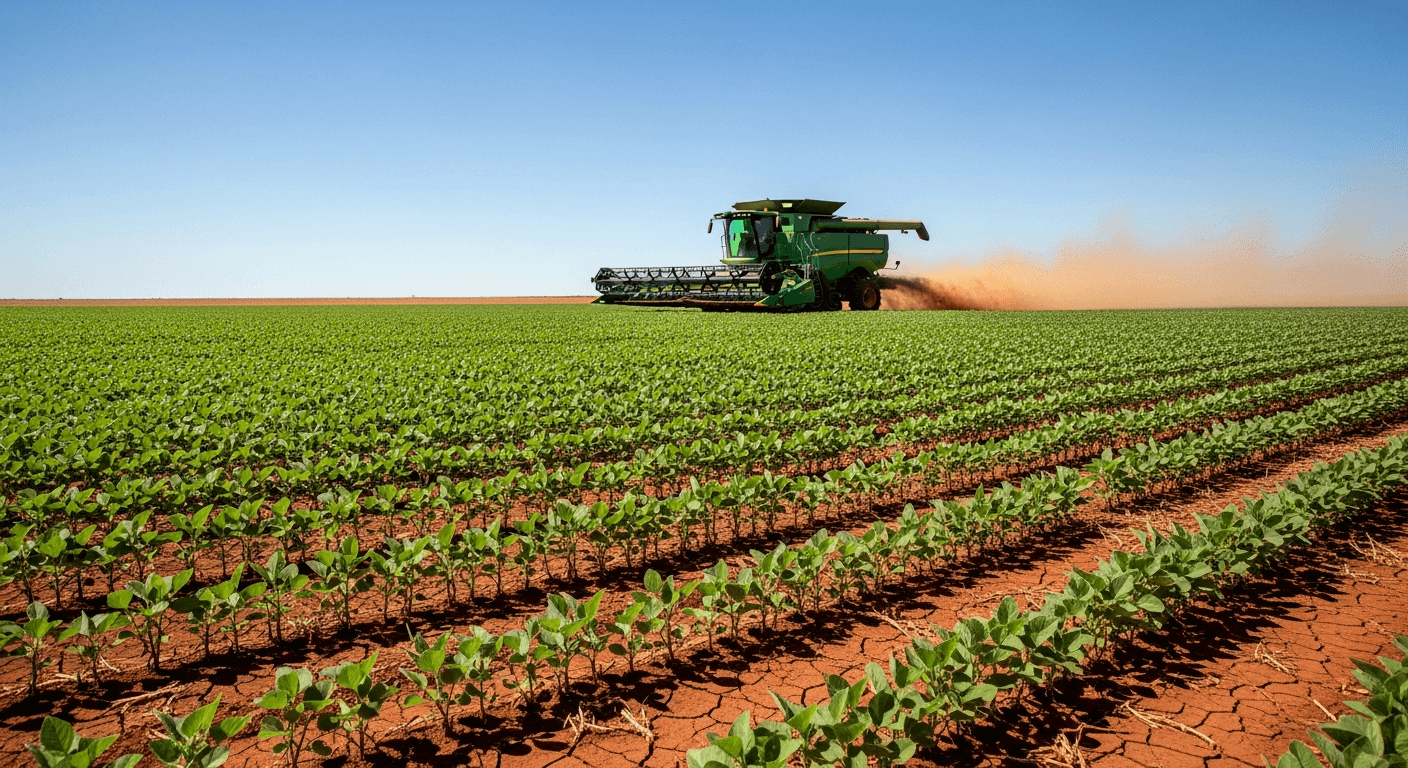
Brazil’s massive, near-record grain output is currently acting as a critical shock absorber for the global food system, cushioning world prices from the severe droughts and delayed planting caused by the intensifying El Niño climate phenomenon across Asia and Australia. Analysts and the United Nations Food and Agriculture Organization (FAO) indicate that the global food supply chain is significantly more resilient to this year’s "super" El Niño due to technological advances, near-record inventories, and the sheer scale of production from major exporters like Brazil. National crop agency Conab recently raised its total grain crop forecast for the 2025/26 season to 360.11 million metric tons, a historic volume driven by strong soybean and corn results.
The need for this buffer is becoming acute in the Northern Hemisphere, where the strong El Niño is hitting the production of staple crops. Dryness has disrupted planting across large parts of Asia, including India and Southeast Asia, while Australia faces prospects of drier weather in its key wheat-growing regions. The climate event is creating an uneven commodity shock: while key Asian crops like rice, palm oil, and sugar face heightened risks of disruption, grains in Latin America, primarily Brazil, have benefited from the historically favorable conditions that El Niño typically brings to the region. Brazil's expansion is central to this dynamic, with its soybean exports having increased over 13 times since the 1997/98 season, establishing it as the world’s largest producer and exporter of the oilseed.
Brazil’s output success is a function of a decades-long trend in global agriculture, which has seen world farm production outpace consumption through the adoption of high-yield crops, better irrigation, and improved use of inputs. In the 2025/26 season, Brazil's corn production is expected to reach a record 141.73 million tons, solidifying its position as the world's second-largest corn exporter. Preliminary estimates for the 2026/27 soybean crop project production to grow even further, potentially reaching 185.6 million tons.
However, the role of global stabilizer comes with a looming domestic risk. While conditions have been favorable, the "super" El Niño is forecast to intensify during Brazil’s critical soybean planting window between September and November, carrying a nearly 90% chance of a strong event. This raises the potential for weather volatility in Brazil, which, coupled with logistics frictions and high input costs, poses a risk to future harvests. The risk is underscored by current dry conditions in major grain areas: key producing centers like Sorriso in Mato Grosso, Rio Verde in Goiás, and Luís Eduardo Magalhães in Bahia have received 0.0mm of rain over the last seven days. The challenge for Brazilian farmers now is to navigate the coming season's financial pressures and the high probability of weather disruption to maintain the supply that the world has come to rely on.
What it touches Global soft commodities are directly affected by this production and weather dynamic. As of today, Chicago Board of Trade (CBOT) Soybean futures are trading at 1173.75 cents per bushel, while Corn futures are at 463.75 cents per bushel. The Brazilian Real (BRL) is trading at 5.1279 against the U.S. Dollar.