
Brazil’s Record Grain Stocks Become Global Buffer Against El Niño Food Shock
Near-record global grain supplies and Brazil’s massive soybean output are cushioning the world food system from a powerful El Niño.
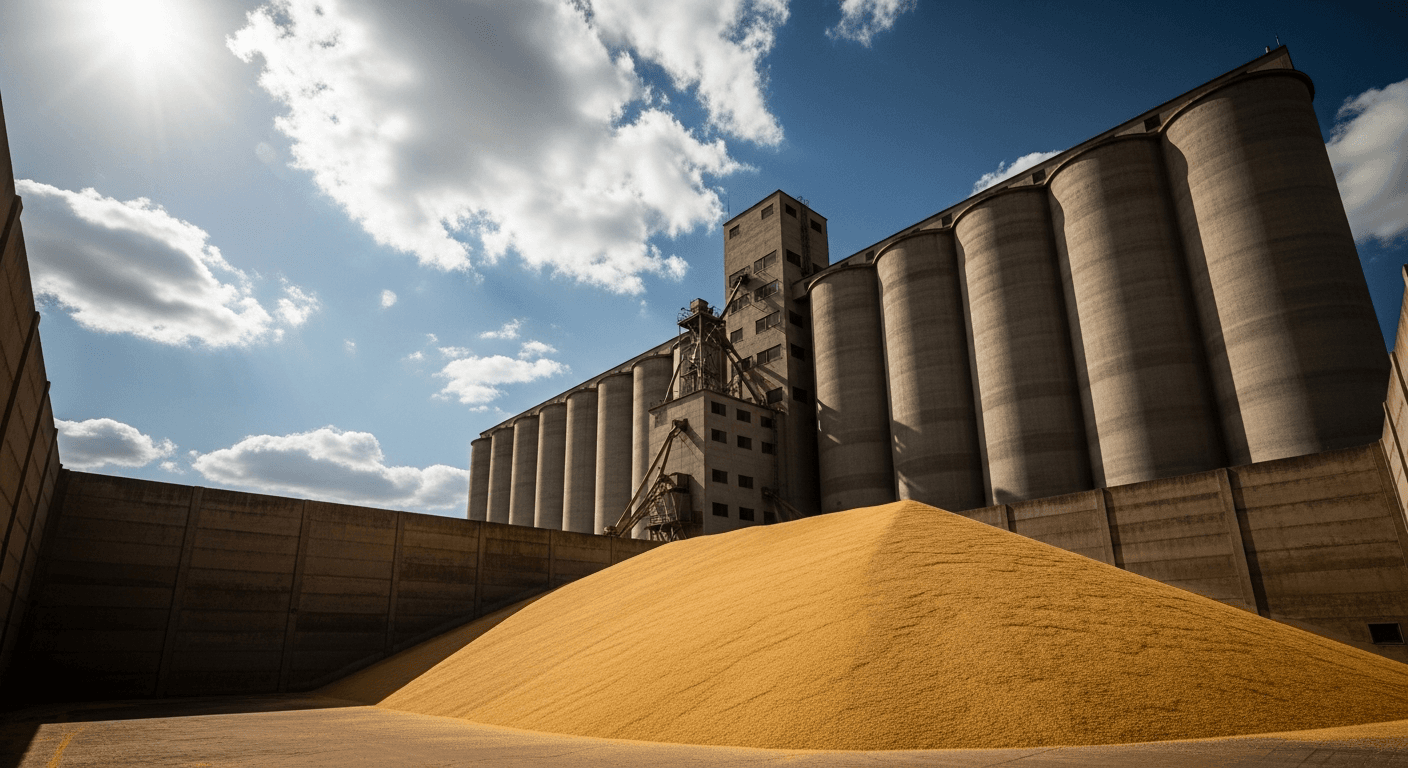
The global food system is far more resilient to the intensifying threat of El Niño than it was during previous major weather events, thanks in large part to near-record grain inventories worldwide and the massive expansion of Brazil’s agricultural output. Meteorologists warn that the current El Niño, a climate pattern that disrupts rainfall globally, is strengthening and will continue to cause crop damage in vulnerable regions like Asia and Australia. However, the international supply chain now has a significant cushion, a change best illustrated by Brazil’s rise as a food superpower: the country’s soybean exports have grown by more than 13-fold since the last major El Niño episode in 1997/98.
This exponential growth in Brazilian capacity is acting as a major global shock absorber, offsetting potential production losses in other parts of the world. In the late 1990s, an El Niño-driven drought caused widespread panic and significant price spikes for commodities like sugar and palm oil, as supplies were concentrated in fewer hands. Today, Brazil’s status as the world’s largest soybean exporter, alongside the emergence of other major grain exporters, has diversified global supply. This means that a poor harvest in one country no longer translates as immediately or severely into a global shortage.
For Brazil itself, the El Niño pattern brings a complex mix of consequences. While the phenomenon generally tends to increase rainfall in the southern part of the country, it also risks reduced precipitation across the crucial Center-West and northern agricultural frontiers, which include states like Mato Grosso and Goiás. The key soybean-producing regions of Sorriso, MT, and Rio Verde, GO, have seen no measurable rain over the last seven days, while Cascavel in Paraná has received a modest 29.8mm, showing the highly localized and mixed weather effects farmers are navigating across the continental-sized country. This highly regionalized risk means that while potential record yields are forecast in parts of the South, drought conditions in the key early planting regions remain a material risk.
Beyond Brazil, the global cushion is augmented by vast reserves held elsewhere, such as China, which holds nearly half of the world's ample wheat stocks. This combination of strong starting stocks and decades of advancements in crop science—including drought-tolerant seeds and precision agriculture—provides multiple layers of protection against the climate shock. For an intelligent foreigner, the story of this El Niño is not a simple tale of shortage, but a story about how a more geographically diversified and technologically advanced global food system, anchored by Brazil’s agricultural strength, is being tested.
What to watch next is how Brazil’s farmers respond to the current patchy weather as they finalize planting intentions for the upcoming harvest. Any significant delay to the soybean planting window in the Center-West, for instance, would push back the subsequent planting of safrinha corn and heighten the risk for the next crop cycle. For now, the world’s supply buffer remains high, with prices for global soft commodities like corn and soybeans holding steady at 478.25 ¢/bu and 1184.25 ¢/bu, respectively.
What it touches The resilience of the global food system directly impacts the exchange rate and global soft commodity markets. The relative stability of the Brazilian Real, trading today at R$5.1632 per U.S. dollar, is supported by continued strong export revenue from the agricultural sector. The prices of soybeans and corn, key global soft commodities, remain less volatile than in past El Niño years because of the improved global supply outlook.