
Brazil’s Corn Export Lag Signals Logistics Pressure as Safrinha Harvest Nears Peak
Anec initially projected a 14% drop in Brazil's July corn exports, an alert due to the delayed safrinha harvest.
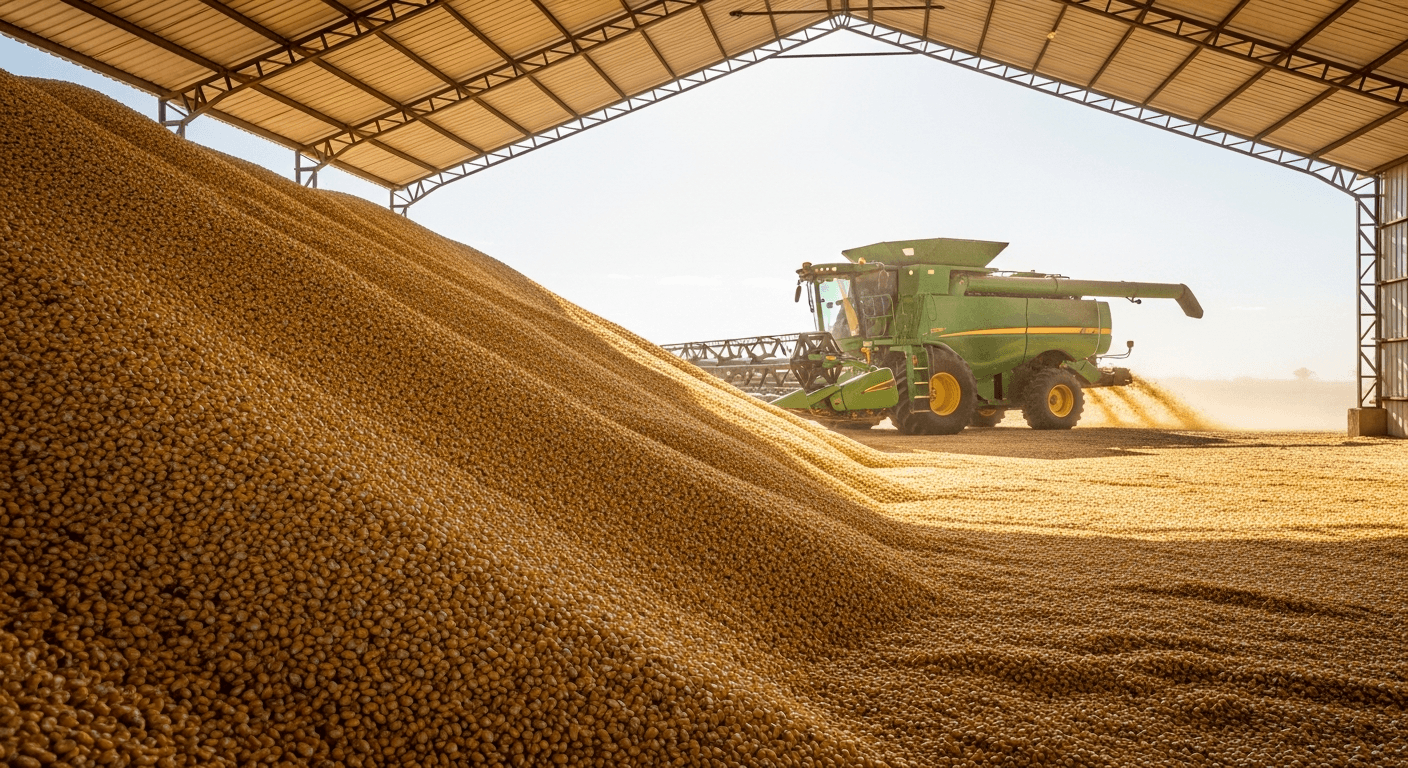
Brazil’s National Association of Cereal Exporters (Anec) initially projected that the country’s corn exports for July would total 3.43 million tons, reflecting a 14% year-on-year drop from the same month last year. This short-term lag in shipments is a direct consequence of the delayed harvest of the safrinha (second corn crop), which accounts for the vast majority of Brazil’s annual corn production and is the source for the majority of its exportable surplus. While the harvest was nearing 60% of the planted area last week, the slower pace compared to the previous cycle is pushing export volumes out of the typical July window and into later months, signaling immediate short-term pressure on port logistics and global supply flows from the world’s largest corn exporter.
The initial drop projection, however, has been partially mitigated by subsequent data, with Anec revising its July forecast upward to 4.51 million tons based on more recent ship schedules and improved harvest acceleration. Despite the revision, the initial, lower-than-expected number underscores how the later-than-usual harvest is affecting the supply chain's synchronization with global demand. Analysts note that Brazilian safrinha progress is confirmed to be behind last year’s pace due to earlier planting delays caused by adverse weather. The consequence is that corn volumes are only now beginning to arrive at export terminals, delaying the execution of July contracts. This lag follows a period where the first half of July already saw a significant slowdown in export pace compared to the prior year.
For investors tracking global supply, the main takeaway is one of deferment rather than outright loss, as robust crop forecasts remain in place. The delay means that a large volume of the safrinha crop will likely be channeled through ports in August and September, potentially creating logistical bottlenecks that can be common when the harvest is compressed. While the delayed corn arrivals can temporarily tighten global spot supply, the total volume remains poised to compete heavily with U.S. supplies later in the year, which acts as a key bearish anchor on international prices. Futures positioning reflects this complexity; data from the Commitments of Traders (COT) report shows a significant net long position in corn (492,296 long contracts versus 305,646 short), suggesting the market maintains a fundamentally bullish outlook that looks past the current logistical hiccup.
Looking ahead, the next key data point for investors to monitor will be the pace of the safrinha harvest completion in the coming weeks and Anec’s first projection for August exports. The weather in key central states also bears watching, with Luís Eduardo Magalhães in Bahia and Rio Verde in Goiás reporting seven consecutive dry days, while Cascavel in Paraná has received only 10.6mm of rain over the last seven days, which supports harvest completion but raises concerns for the next planting cycle. An acceleration in the harvest is required to ensure port flows normalize and fully capture the late-season export window.