
Brazil Soybean Belt Dryness Raises Supply and Price Risks
A persistent dry spell in Brazil's key soybean regions of Mato Grosso, Bahia, and Goiás raises crop-stress risks, threatening global supply and lifting prices.
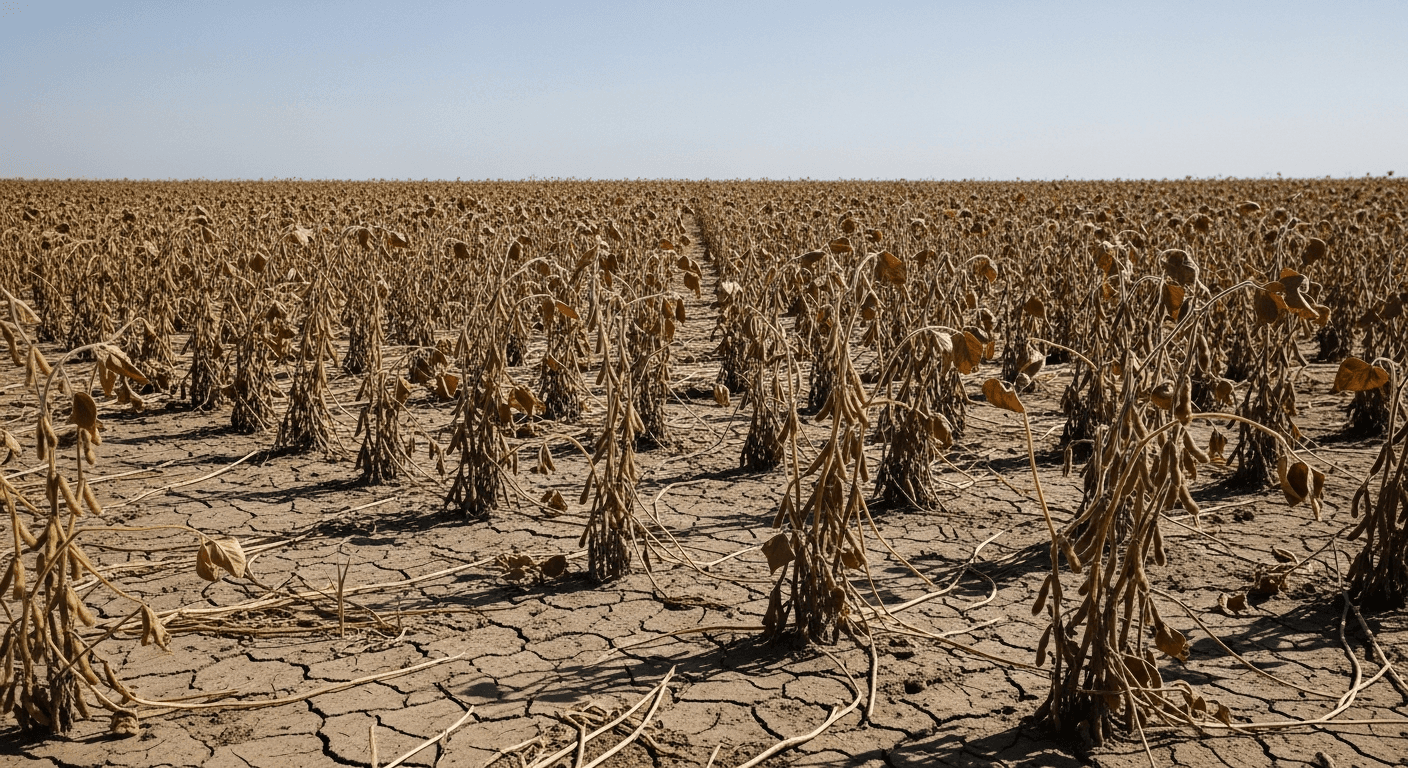
A prolonged dry spell across Brazil’s primary soybean-producing regions is raising concerns over crop-stress risks, potentially tightening global oilseed supply and driving up agricultural commodity prices. According to recent meteorological data, key agricultural hubs in the Center-West and Northeast regions have recorded zero precipitation over the last week. Specifically, Sorriso in Mato Grosso, Luís Eduardo Magalhães in Bahia, and Rio Verde in Goiás have all registered seven consecutive dry days with 0.0 mm of rainfall.
This localized dryness contrasts sharply with conditions in southern Brazil, where Cascavel in Paraná recorded 26.9 mm of rainfall and only three dry days over the same seven-day period. While the southern rains offer some soil moisture relief, the persistent lack of moisture in the central and northern soybean belts remains a critical watchpoint for commodity traders. The dryness comes amid broader market discussions regarding the developing El Niño weather pattern, which historically brings below-average rainfall to central Brazil while increasing precipitation in the south.
For global investors and agribusinesses, the threat of water stress in these high-output regions could disrupt early-stage crop development and delay planting schedules. Any reduction in Brazil's production potential typically triggers upward pressure on Chicago Board of Trade (CBOT) soybean futures and influences the USD/BRL exchange rate, as agricultural exports represent a vital source of dollar inflows for the Brazilian economy.
Market positioning reflects a cautious but active stance among institutional traders. According to the latest Commitment of Traders (COT) report, soybean speculative positions stand at 19,958 long contracts versus 1,000 short contracts. Meanwhile, COT data for other major commodities shows corn at 520,962 longs and 462,629 shorts, while coffee holds 54,475 longs against 39,422 shorts. Analysts warn that if the dry spell in Mato Grosso, Bahia, and Goiás persists, a rapid shift in market sentiment could further support soybean prices.