
Brazil Soybean Belt Dryness Raises Early Crop-Stress Risks
A persistent dry spell in Brazil's key soybean regions, including Sorriso and Rio Verde, is raising soil moisture concerns ahead of the 2026/27 planting season.
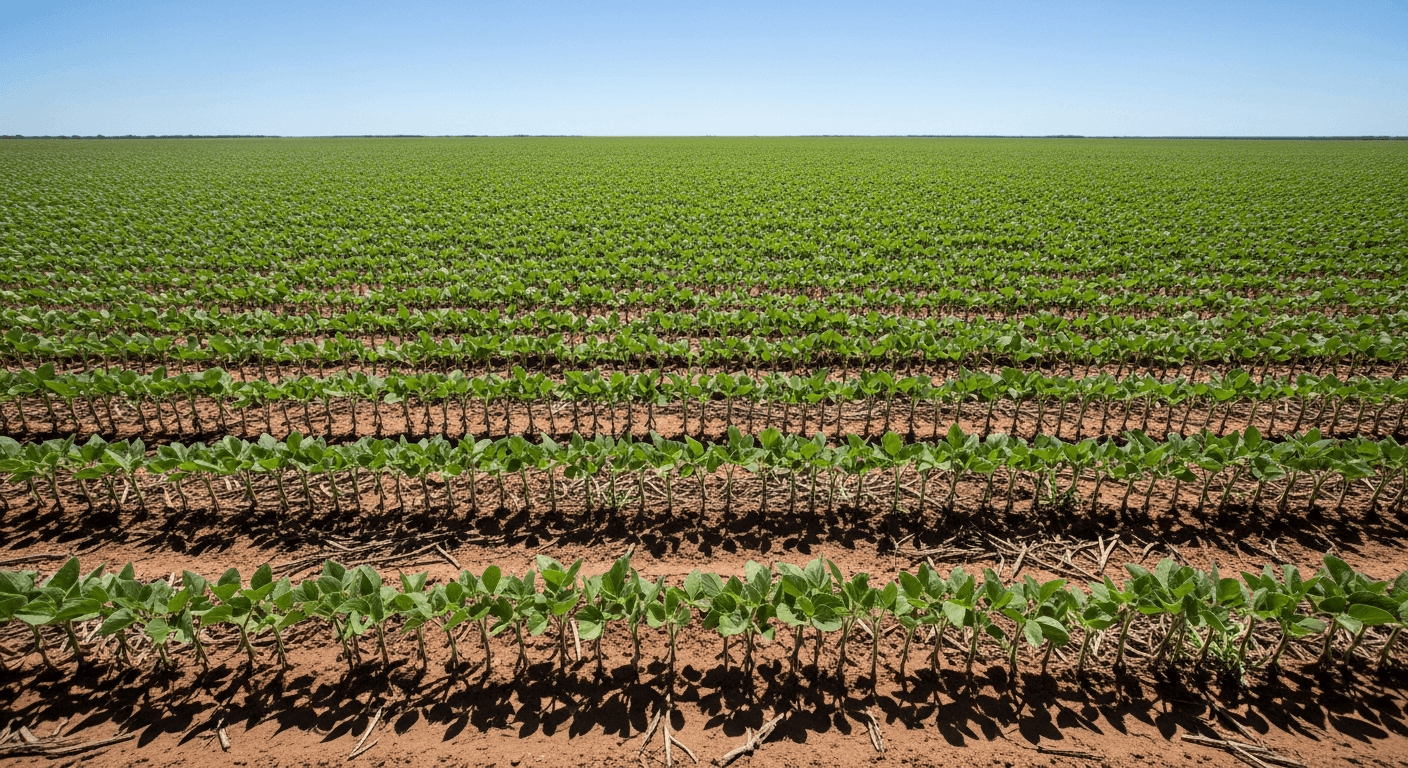
A prolonged dry spell across Brazil’s primary agricultural frontier is raising crop-stress risks and drawing close attention from commodity traders. In key soybean-producing municipalities, soil moisture reserves are depleting rapidly. According to recent meteorological data, Rio Verde (Goiás), Luís Eduardo Magalhães (Bahia), and Sorriso (Mato Grosso) have all recorded seven consecutive dry days with 0.0 mm of precipitation. In contrast, southern regions like Cascavel (Paraná) have maintained healthier moisture profiles, registering 39.5 mm of rain over the last week with only three dry days.
While the current 2025/26 harvest is virtually complete, this persistent lack of rainfall in the Center-West and MATOPIBA regions threatens to delay early soil preparation and planting for the upcoming 2026/27 marketing year. Agribusiness consultancies note that El Niño-related weather patterns could further delay the start of planting, which typically begins in September. Such delays could compress the window for the subsequent second-crop corn cycle, adding supply-side pressure to global grain markets.
This localized water stress comes at a delicate time for global investors monitoring Brazil agribusiness and broader Latin American equities. In the financial markets, currency fluctuations remain a key driver of farmer selling decisions, with the USD/BRL exchange rate heavily influencing local crop pricing and export competitiveness. Market participants tracking the MSCI Brazil ETF (EWZ) are closely watching how these weather anomalies and potential planting delays might impact corporate earnings for major agricultural producers and logistics operators.
Meanwhile, speculative positioning in the futures markets shows a highly active trade. The latest Commitment of Traders (COT) data reveals that soybean speculative positions stand at 20,018 longs versus 1,139 shorts. In related agricultural markets, corn speculative positions are highly leveraged at 482,223 longs to 350,760 shorts, while coffee contracts show 53,913 longs against 26,086 shorts. If the dry conditions in Mato Grosso, Goiás, and Bahia persist into the late third quarter, the resulting supply concerns could trigger heightened volatility in both grain futures and Brazilian ADRs.