
Brazil Soybean Belt Dryness Raises Crop-Stress Risk
Persistent dry spells across Brazil's key soybean regions, including Mato Grosso and Paraná, threaten crop yields and could tighten global supplies.
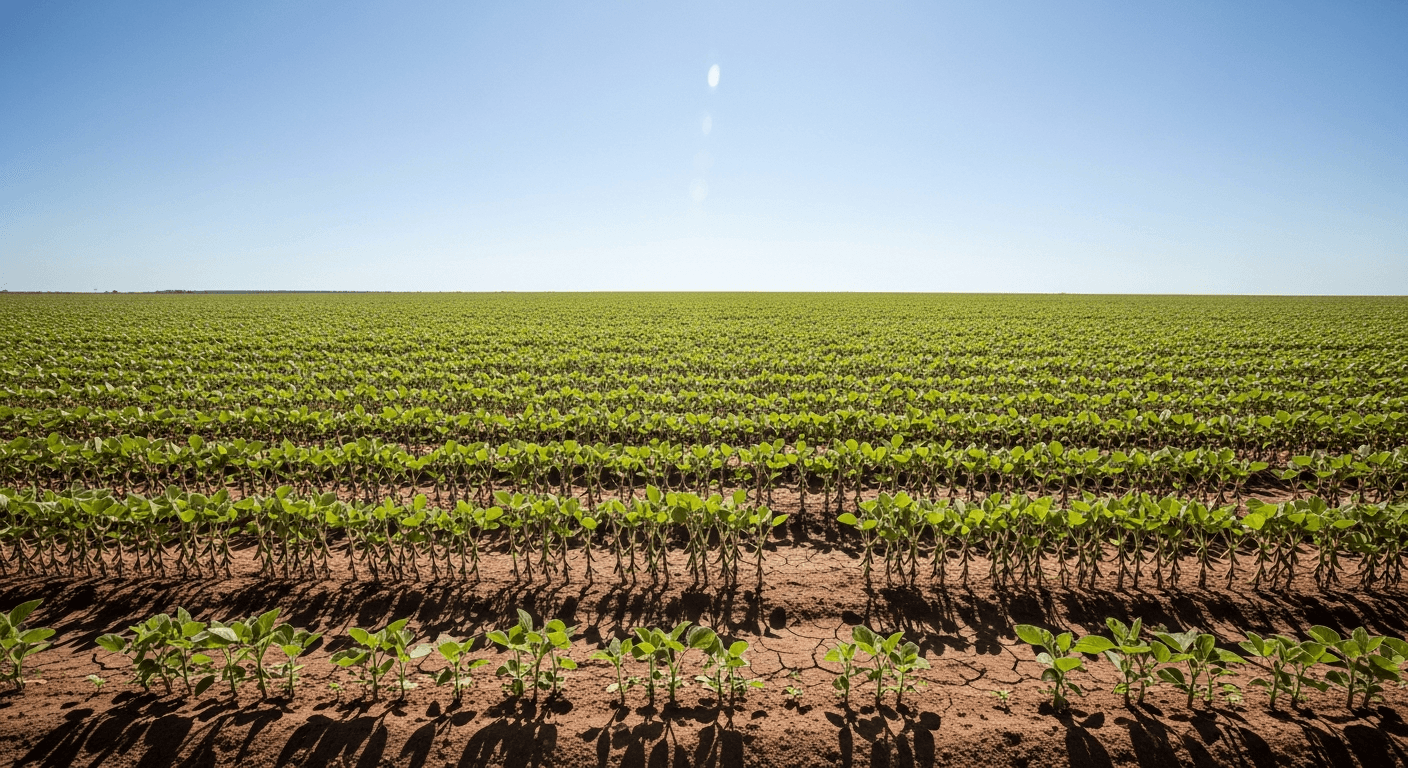
A persistent dry spell across Brazil’s primary soybean-producing states is raising crop-stress risks, threatening to tighten global supplies and pressure agricultural commodity markets. Recent meteorological data highlights a severe lack of moisture in critical agricultural hubs, heightening concerns for the upcoming growing season. In Cascavel (PR) and Luís Eduardo Magalhães (BA), no significant rainfall has been recorded over the last seven days, with both regions registering seven dry days and cumulative precipitation of 0.0 mm and 1.3 mm, respectively.
The dryness extends into the Center-West region, where Sorriso (MT) recorded six dry days and a mere 5.1 mm of rainfall over the past week. Similarly, Rio Verde (GO) experienced six dry days with only 1.2 mm of precipitation. This lack of moisture is critical as the market monitors South American weather patterns to gauge whether Brazil can meet the United States Department of Agriculture's (USDA) projection of a record 186 million metric ton harvest for the 2026/27 marketing year.
For financial markets and commodity traders, these localized droughts serve as a key catalyst for price volatility. On the Chicago Board of Trade (CBOT), benchmark soybean futures have already shown upward momentum, trading around $12.11 per bushel. The market's bullish sentiment is further supported by the latest Commitment of Traders (COT) data, which reveals that soybean speculative positioning remains heavily net long, with 215,618 long contracts compared to 102,811 short contracts.
In addition to supply-side constraints, currency fluctuations continue to play a pivotal role in trade dynamics. A volatile USD/BRL exchange rate directly influences the competitiveness of Brazilian exports. While a stronger U.S. dollar makes Brazilian soybeans highly attractive to major global buyers like China, localized crop stress and reduced yield expectations could offset these currency advantages, driving global prices higher as exportable surpluses shrink.