
Brazil Soybean Belt Dry Spell Raises Risk of Delayed Planting, Supply Concerns
Near-zero rain in key Brazilian states raises major crop-stress risk ahead of the 2026/27 soybean planting season.
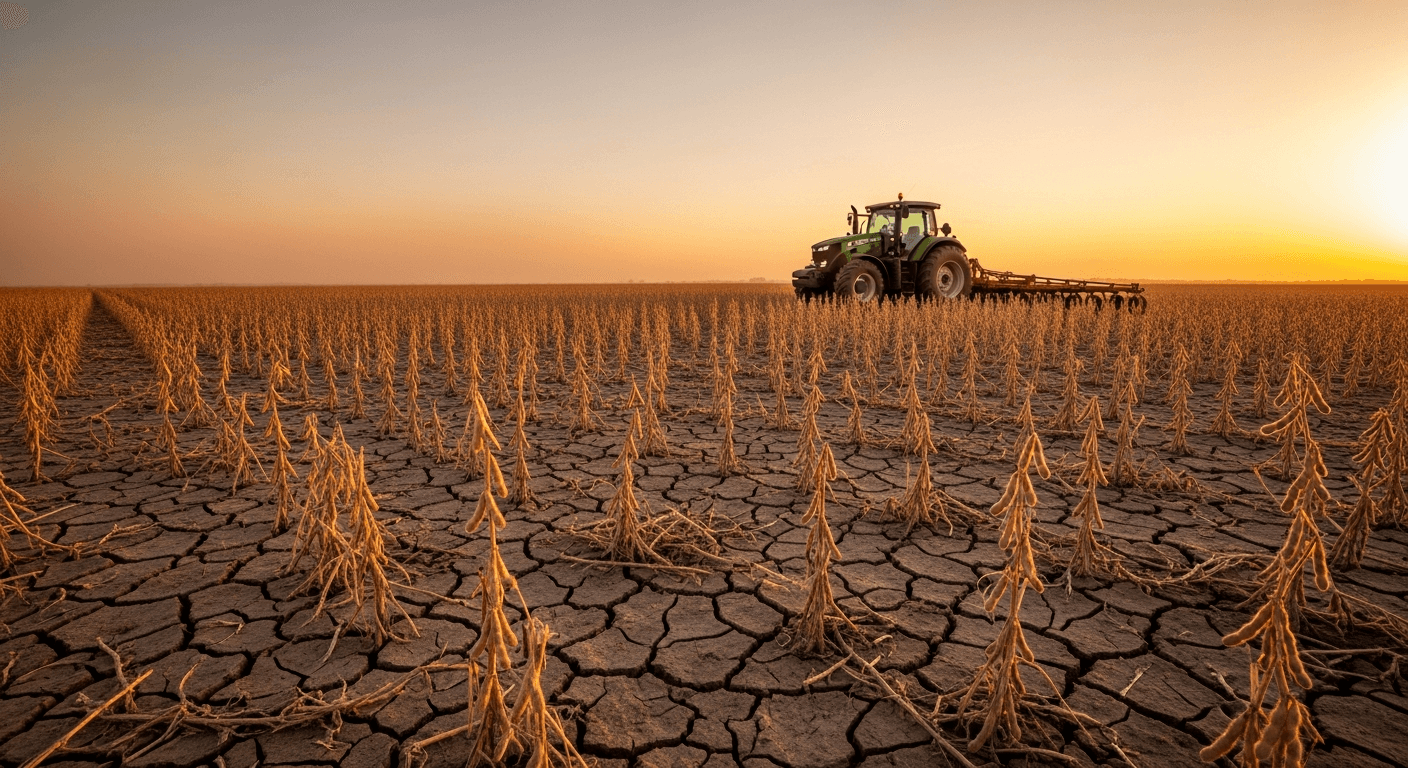
A deepening dry spell across Brazil’s major soybean producing states is raising significant concern for the country's 2026/27 crop outlook, fueling speculation of potential planting delays and future supply tightness. Four crucial agricultural hubs—Rio Verde in Goiás (GO), Sorriso in Mato Grosso (MT), Luís Eduardo Magalhães in Bahia (BA), and Cascavel in Paraná (PR)—have all experienced nearly a week without meaningful precipitation, a critical factor for soil moisture replenishment ahead of the September/October planting window. This looming production risk comes as CBOT soybean futures pulled back sharply on the day, with the benchmark falling 2.17% to 1,219.66 USd/Bu in the latest trade.
The rainfall deficit is most acute in the heart of the Center-West and Northeast. Rio Verde (GO), Sorriso (MT), and Luís Eduardo Magalhães (BA) have recorded zero to 0.2mm of rain over the last seven days, coupled with seven consecutive dry days. Even in the southern state of Paraná, Cascavel has seen only 10.6mm of rain over seven days and five dry days. These conditions are material to the market because they deplete the deep soil moisture necessary for the initial planting and germination phase, which farmers typically begin in September and ramp up in October. A delay in the soybean planting schedule not only shortens the growing season for the primary crop but also carries a critical second-order effect: it pushes back the planting of the highly profitable second-crop corn, known as safrinha, significantly increasing the exposure of that crop to drought and frost risk later in the season.
The dry start to the crop year is setting the stage for increased volatility in global grain markets. Speculative positioning shows a substantial net long interest in the market, with 182,923 long contracts versus 69,063 short contracts in the latest Commitment of Traders (COT) report for soybeans. This existing net long exposure highlights the potential for sharp price swings should the current weather pattern persist and translate into confirmed planting delays. While the currency market showed the Brazilian Real strengthening slightly, with the USD/BRL spot rate at R$5.0846, down 0.26% from the previous session, sustained commodity price support driven by these domestic supply risks could temper any further appreciation of the Real.
Investors are now focused on weekly weather forecasts for the major producing regions of Mato Grosso and Paraná. The timing of the chuva (rain) to properly initiate the season is the next critical signal. Any further reports from Brazil's National Supply Company (CONAB) indicating a delay in the national soybean planting progress, which typically accelerates in the coming weeks, will confirm a tightening outlook. The key risk metric to watch is the consistency and volume of rainfall through August into early September, which will determine if Brazil avoids a significant setback to its ambitious 2026/27 production targets.