
Brazil Soybean Belt Dry Spell Raises Global Commodity Price Risk; Funds Hold Bullish Posture
A week-long dry spell across Brazil's key soybean regions is raising crop-stress risk, threatening supply and supporting Chicago futures.
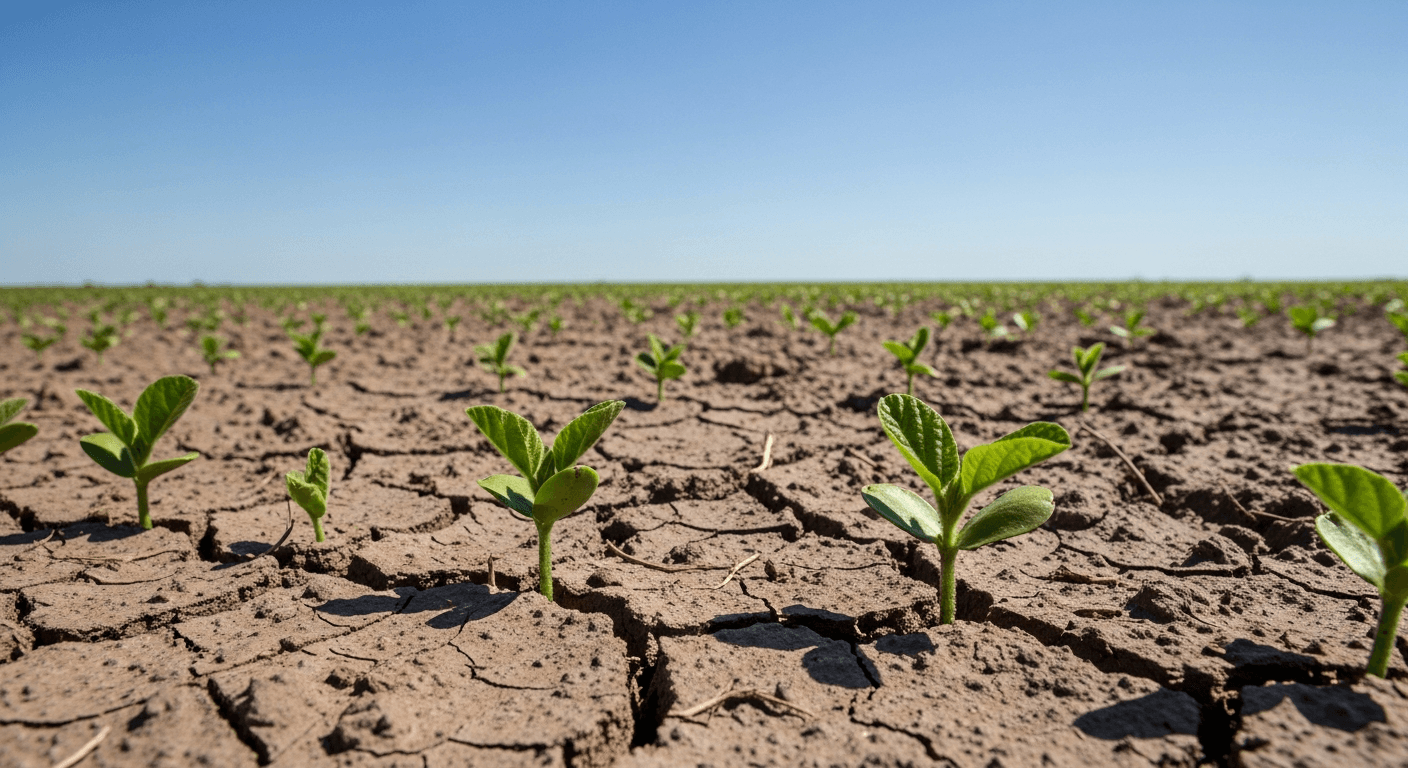
A persistent dry spell in several of Brazil's top soybean-producing regions is injecting fresh risk into global commodity markets, threatening the outlook for the next crop cycle and supporting bullish positions in Chicago futures. Data for the past week shows critical water stress across the agricultural belt, with the key municipalities of Rio Verde in Goiás (GO) and Luís Eduardo Magalhães in Bahia (BA) recording seven consecutive dry days and zero millimeters of rain.
The lack of moisture is critical for the initial development phase of the crop, with conditions nearly as stressed in Mato Grosso (MT) and Paraná (PR). The Sorriso-MT region, the heart of the national crop, logged seven dry days with only 1.4mm of rain over the last week, while Cascavel-PR recorded six dry days with minimal relief at 17.0mm. Any sustained water deficit at this stage raises the specter of reduced yields and tighter global supply. This weather-driven uncertainty is already reflected in the market, with soybeans trading at 1,203.74 US cents per bushel as of July 28, 2026, maintaining a significant year-over-year increase.
The market reaction is underpinned by Brazil’s central role as the world's largest soybean producer. A material reduction in the Brazilian harvest forces global buyers, particularly China, to pivot demand to the U.S. and other sources, tightening supply and driving up the Chicago Board of Trade (CBOT) price. The derivative market reflects this sentiment, with Commodity Futures Trading Commission (CFTC) data showing non-commercial traders holding a strongly net-long position of 182,923 contracts against 69,063 short positions in soybean futures. Investor conviction is clearly on the side of a supply constraint event, giving the dry weather reports immediate weight.
For the Brazilian financial market, any threat to the crop also introduces pressure on the USD/BRL exchange rate, which is currently trading around 5.1151 Real per Dollar. A poor export crop leads to lower future foreign currency inflow, which can weaken the Brazilian real and increase volatility for investors tracking B3-listed agribusiness assets. As Brazilian farmers receive payment in U.S. dollars but incur costs in Reais, a poor crop combined with a weaker currency complicates profitability for the entire Agribusiness supply chain.
Investors should focus on upcoming reports for the next indication of whether the current dry spell is a temporary fluctuation or a systemic threat to the crop. The market will closely watch the next official national estimates from the USDA on August 12th and CONAB's revised figures on August 13th for a comprehensive update on production forecasts, which will likely serve as the next major pivot point for global commodity pricing.