
Brazil dry spell triggers crop stress in major soybean belts
A persistent dry spell in key Brazilian agricultural regions like Rio Verde and Sorriso is raising crop-stress risks, threatening global soybean supplies.
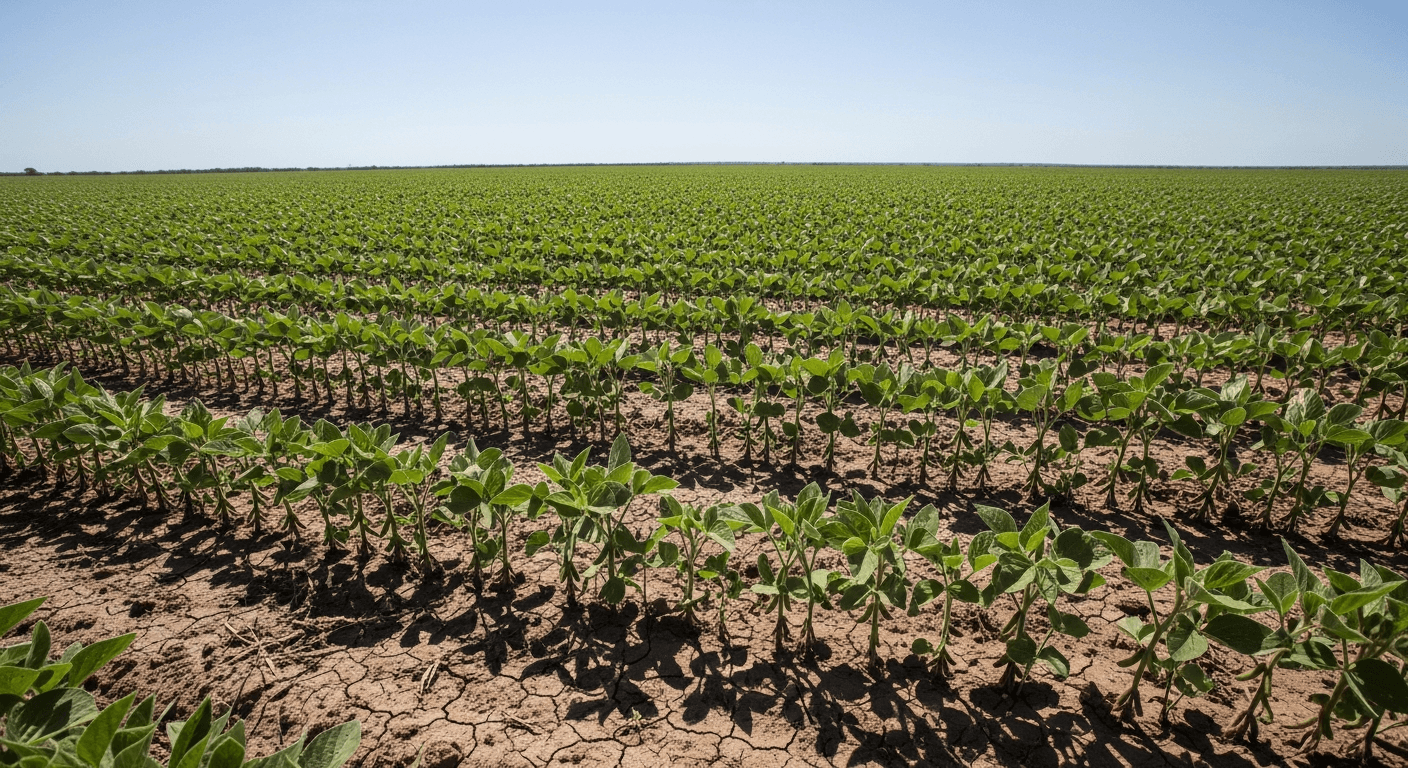
A prolonged dry spell across Brazil’s primary agricultural heartland is raising crop-stress concerns, threatening to tighten global soybean supplies and drive market volatility. Key producing regions in the Center-West and Northeast have experienced consecutive days of near-zero precipitation, leaving soil moisture levels highly depleted. With Brazil standing as the world's largest soybean exporter, any threat to its domestic output directly impacts global commodity pricing and export projections.
According to the latest meteorological data as of July 6, 2026, Rio Verde in Goiás has recorded seven consecutive dry days, yielding a critical 0.2 mm of rainfall over the last week. Similarly, Luís Eduardo Magalhães in Bahia registered six dry days with just 1.8 mm of precipitation, while Sorriso in Mato Grosso reported six dry days and a meager 6.0 mm of rainfall. In contrast, southern regions like Cascavel in Paraná have seen healthier moisture levels, recording 34.1 mm of rain over the last week despite four dry days.
This localized water stress is emerging at a time of shifting speculative sentiment in the agricultural futures markets. The latest Commitment of Traders (COT) report shows soybean speculative positioning holding at 170,625 long contracts against 111,604 short contracts, reflecting a market highly sensitive to supply-side disruptions. Meanwhile, the broader agricultural complex continues to monitor weather risks, with COT positioning for corn at 520,962 longs to 462,629 shorts, and coffee at 54,475 longs to 39,422 shorts.
For global commodity traders and financial investors, the persistent lack of rain in these key Brazilian jurisdictions remains a critical indicator. If the dry spell continues to degrade soil conditions in Mato Grosso and Goiás, the resulting crop stress could limit yield potential for the upcoming cycles. This supply-side vulnerability is expected to keep a firm floor under international soybean prices while heavily influencing the USD/BRL exchange rate, as agricultural export revenues remain a primary driver of the Brazilian currency.