
Brazil Court Halts New Glyphosate Approvals for 90 Days, Elevating Risk for Agro Sector
A Labor Court in Brasília temporarily suspended the registration of new glyphosate-based agrochemicals, signaling heightened legal risk for Brazilian agriculture.
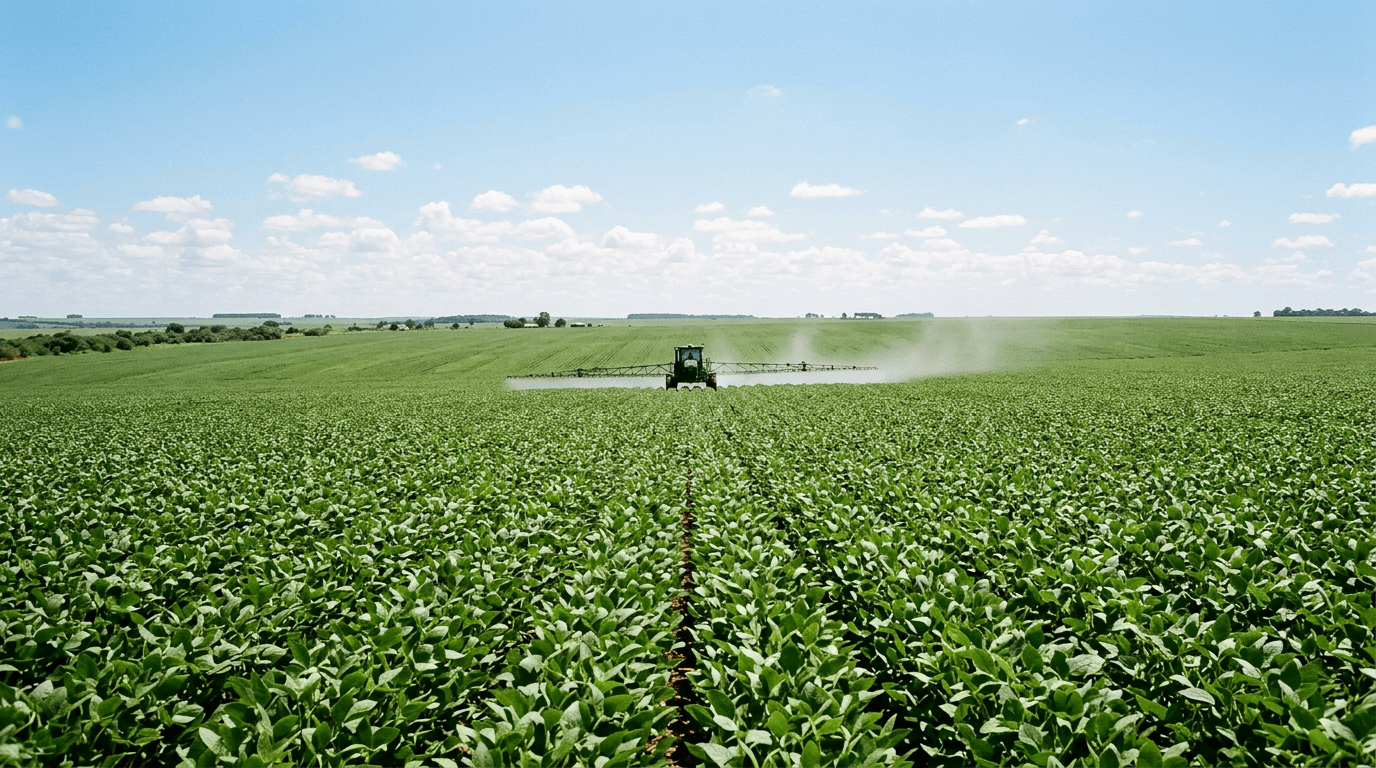
A Brazilian Labor Court on September 4 ordered a 90-day nationwide suspension on the registration and authorization of new glyphosate-based herbicides and their derivatives, raising the regulatory temperature for the country's multi-billion dollar agricultural sector. The ruling from the 7th Labor Court of Brasília means that no new formulations, extensions of use, or equivalence registrations for the world’s most-used weedkiller can be processed in Brazil during the period.
The decision is a partial victory for the Ministério Público do Trabalho (MPT), the Federal Labor Prosecutor's Office, which had filed a civil public action arguing that the chemical posed unacceptable health and environmental risks, particularly to rural workers. Glyphosate is the most commercialized active ingredient in Brazil, accounting for 32% of the national agrochemical market, making the case a critical matter for an economy heavily dependent on commodity exports like soy and corn.
Judge Gustavo Carvalho Chehab declined the MPT’s request for an immediate, total ban on the herbicide, instead choosing what he described as the "least burdensome measure" available. The key reasoning cited was the failure of regulatory agencies to complete mandatory re-evaluations of the active ingredient, a process required under Brazil's 2023 pesticide law (Lei 14.785). The judge's order highlights a significant gap in the regulatory oversight of the country’s agricultural inputs.
Crucially, the temporary suspension affects only new product registrations and does not immediately ban or remove existing glyphosate products from use by farmers in major agricultural hubs, such as Sorriso, in Mato Grosso state, or Rio Verde, in Goiás. However, it signals a strong willingness by a branch of the Brazil court system to intervene directly in pesticide policy, presenting a new legal challenge to the long-standing use of the chemical in the country’s vast Brazilian agriculture industry.
The 90-day window is intended to compel the National Health Surveillance Agency (ANVISA) and the Environmental Agency (IBAMA) to submit comprehensive environmental and toxicological risk assessments. ANVISA is also directed to review irregularities in the labeling of existing products. These reports will form the basis for the court's final decision on whether to impose broader restrictions on glyphosate in the future. The regulatory uncertainty comes as the currency trades at R$5.0912 to the U.S. dollar and as soybean futures trade at 1299.0 cents per bushel.
What it touches
The ruling directly affects agrochemical input suppliers and manufacturers who rely on new product registrations to enter or expand their market presence in Brazil. While existing supply chains remain untouched, the prospect of a final ruling that restricts the use of the ingredient adds a layer of long-term risk to the outlook for the entire Brazilian corn and soy complex, the basis for the country’s status as a top global grain exporter.

