
Brazil Coffee Harvest Delayed by Severe São Paulo Storms
Heavy rains and hail in São Paulo have knocked up to 40% of the coffee crop to the ground, threatening Arabica quality and driving up global futures.
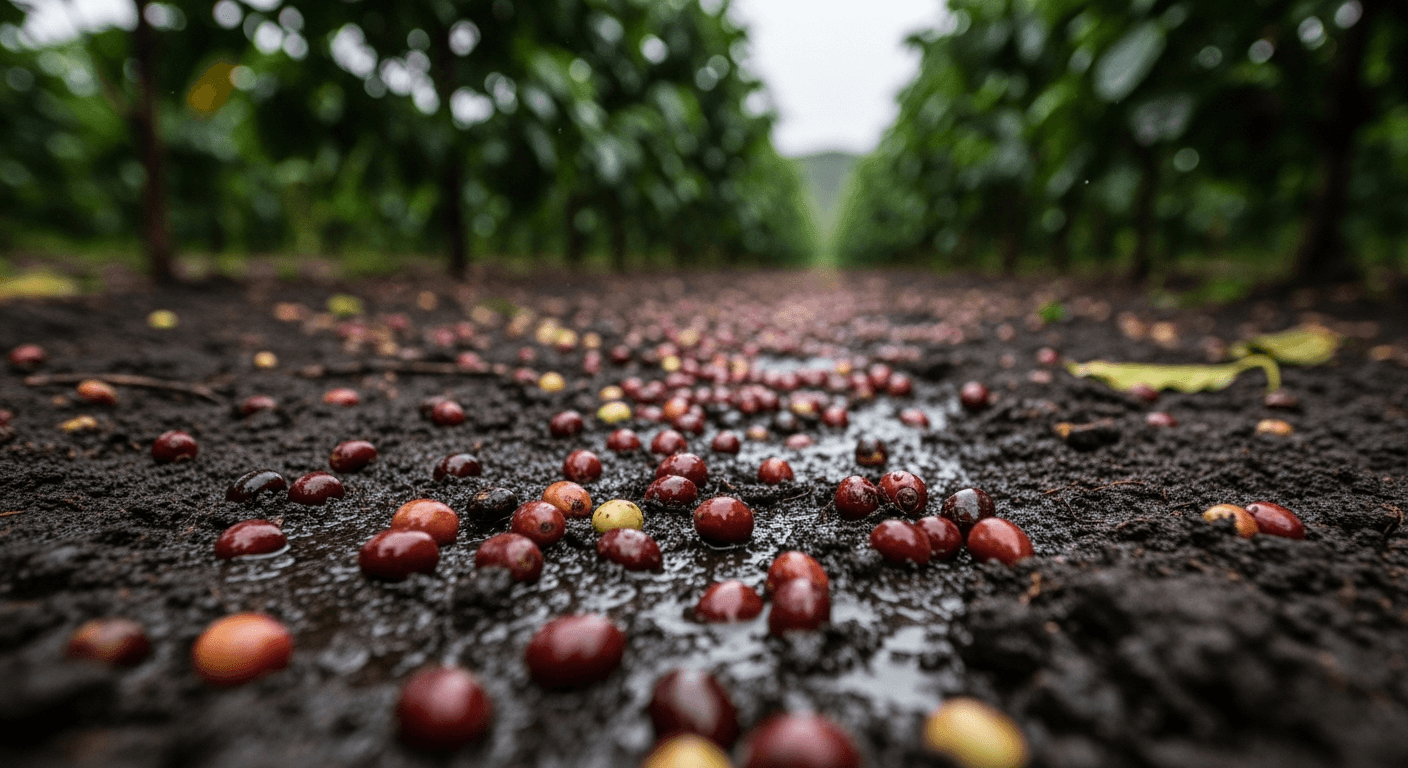
Severe storms, including heavy rains and hail, have battered key coffee-growing regions in São Paulo state, threatening the quality of Brazil’s premium Arabica beans and disrupting global supply expectations. In Garça, a major producing hub in São Paulo, local growers report that up to 40% of their coffee crop has been knocked to the ground. This unseasonal weather has forced the beans into direct contact with wet soil, causing quality degradation and triggering estimated losses of R$ 7,000 per hectare for affected dryland plantations.
The severe weather is compounding existing operational bottlenecks for Brazil agribusiness. The excess moisture is forcing growers to deploy costly emergency manual harvesting to salvage remaining cherries, which has significantly slowed operations. The 2026/27 Arabica harvest in São Paulo was already lagging at just 29% completion, trailing behind the historical five-year average of 30% for this period. This localized disruption comes amid broader national harvest delays, with the overall Brazilian Arabica harvest reaching only 33% completion compared to 42% at the same point last year.
These supply disruptions are reverberating through global commodity markets, driving up Arabica coffee futures (KC1!) on ICE Futures U.S.. Financial markets and foreign investors tracking the US-listed Brazil ETF (EWZ) are closely monitoring the situation as weather premiums escalate. According to the latest Commodity Futures Trading Commission (CFTC) data, speculative positioning remains highly active, with the Commitment of Traders (COT) coffee report showing 53,913 long positions against 26,086 short positions.
The agricultural damage in the Southeast contrasts sharply with dry conditions in other key farming states, where Cascavel-PR recorded 58.8 mm of rain over the last seven days, while Luís Eduardo Magalhães-BA, Rio Verde-GO, and Sorriso-MT all registered 0.0 mm. As currency traders watch the USD BRL exchange rate for macroeconomic direction, the immediate focus for agricultural markets remains on whether upcoming cold fronts will bring further unseasonal rain to São Paulo’s vulnerable coffee fields.