
Brazil Cattle Prices Rise on Tight Supply, Export Optimism
Brazilian finished cattle prices are firming up amid tight physical supply and hopes for new export markets, presenting a margin challenge for major meatpackers.
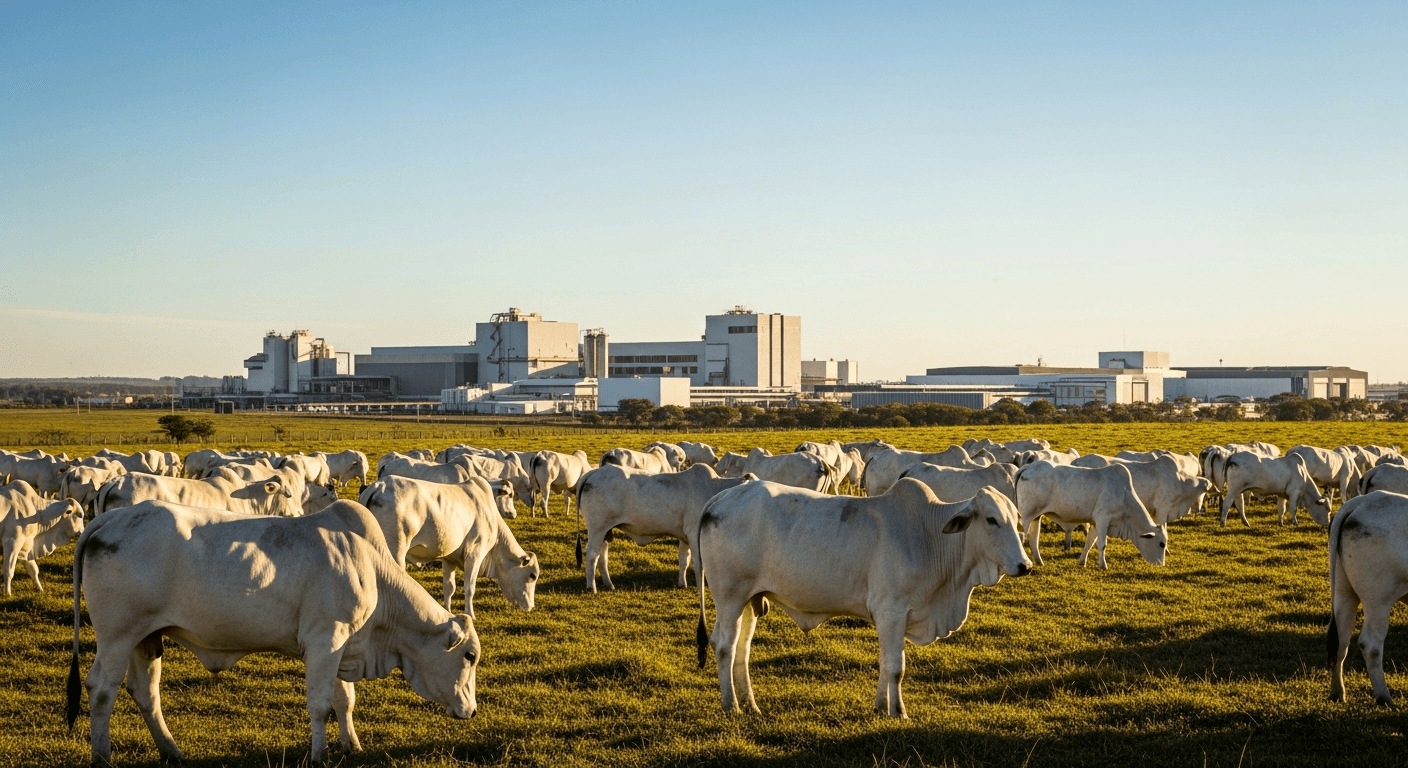
Brazilian finished cattle (boi gordo) prices opened the week with a firm bias, supported by a constrained physical supply that has made it increasingly difficult for local slaughterhouses to extend their processing schedules. In São Paulo, the benchmark price per arroba edged up to R$343.92, compared to R$343.33 at Friday's close. This upward momentum comes as global investors closely monitor the broader health of Brazil agribusiness, a sector that heavily influences the performance of the B3 stock market and key exchange-traded funds like the iShares MSCI Brazil ETF (EWZ).
The mechanism driving this price appreciation is a classic supply-demand squeeze. A structural reduction in the availability of slaughter-ready animals has limited the operating leverage of major meatpackers. At the same time, dry weather conditions across key agricultural regions are keeping pastures dry, with Sorriso-MT, Rio Verde-GO, and Luís Eduardo Mag LEM-BA all recording 7 consecutive dry days and virtually no rainfall over the last week. This dry spell restricts rapid pasture-based weight gain, further tightening the short-term supply of finished cattle.
This supply bottleneck is putting upward pressure on raw material costs for major Brazilian meatpackers, potentially squeezing their domestic margins. On the B3 exchange, major industry players like JBS (JBSS3), Marfrig (MRFG3), and Minerva (BEEF3)—which also trade as American Depositary Receipts (ADRs) in the US—are navigating these rising livestock costs. However, the sector’s long-term outlook remains supported by robust global demand, as reflected in high speculative positioning in other agricultural commodities, with the COT corn net long standing at 492,296 contracts and COT soybeans at 182,923 contracts.
Looking ahead, market participants are highly focused on export diversification to offset rising domestic costs and mitigate the impact of import quotas in traditional markets like China. Optimism is building around the potential opening of the lucrative South Korean market. A bilateral mission is scheduled to inspect Brazilian meatpacking facilities (frigoríficos) in August, a crucial step that could eventually grant Brazilian beef access to a market that imports over 600,000 tonnes annually. Progress on this diplomatic front, alongside fluctuations in the USD BRL exchange rate, will remain key catalysts for investors looking to invest in Brazil's dominant protein export sector.