
Brazil Cattle Prices Cool as Confinement Supply Arrives
Brazil's July boi gordo price spike is set to ease in August as feedlot cattle supply enters the market, relieving pressure on major beef processor margins.
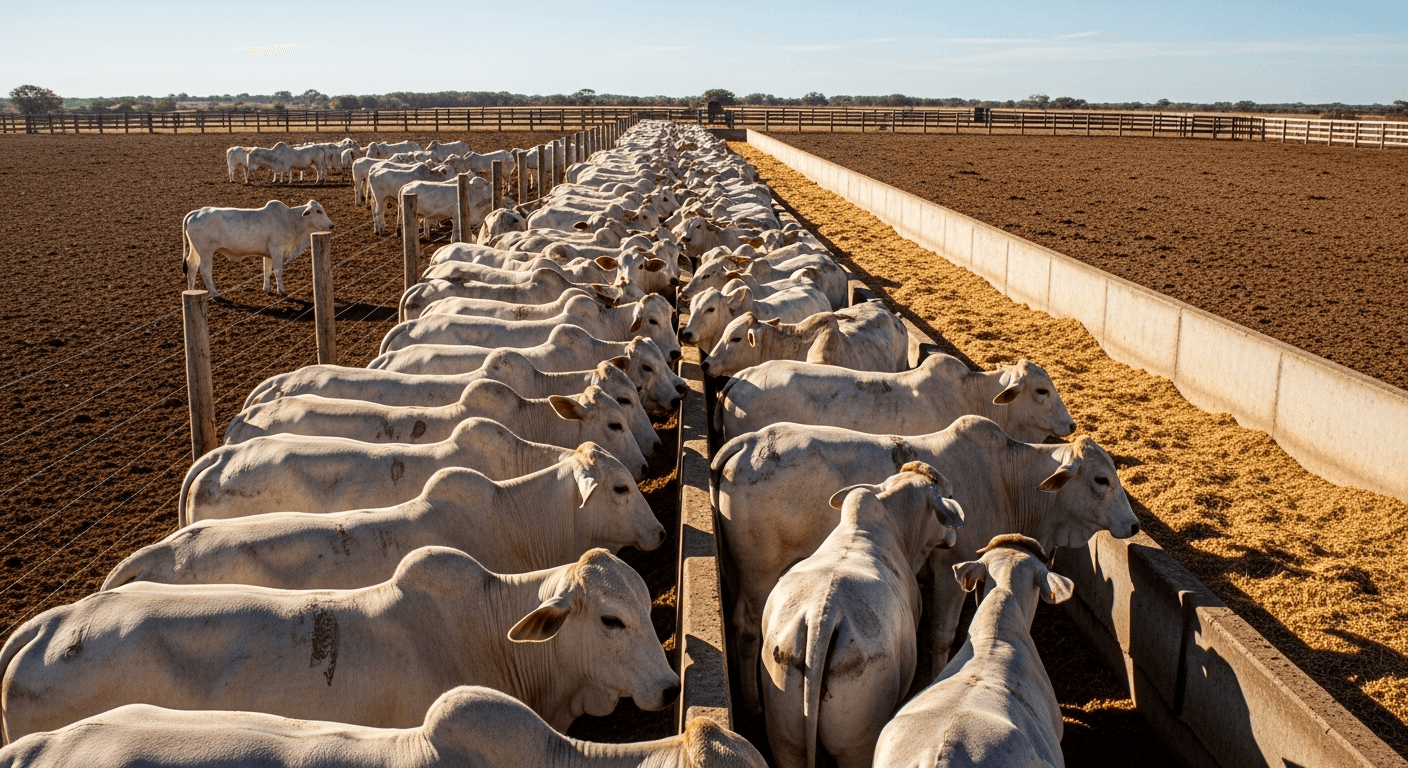
The recent price surge for Brazilian fat cattle, known locally as the boi gordo, is expected to cool in August as short-term supply constraints ease. In July, prices for the 15-kilogram arroba in São Paulo’s capital rose 4.48%, climbing from R$ 335 to R$ 350 due to highly restricted slaughter-ready animal availability. However, market analysts expect this upward momentum to be short-lived as a steady influx of feedlot-confined animals begins to reach slaughterhouses this month.
This shifting supply dynamic will directly impact the margins of major meat processors listed on the Brazilian B3 exchange. When animal availability was tight in July, slaughterhouses faced intense pressure to schedule kills, which temporarily squeezed operating margins. The arrival of confinement cattle in August will allow giants like JBS (B3: JBSS3; ADR: JBSAY), Marfrig (B3: MRFG3), and Minerva (B3: BEEF3) to secure raw materials more predictably, helping to stabilize their production costs.
For global investors tracking the Brazil ETF (NYSE Arca: EWZ) or looking to invest in Brazil, the stabilization of the livestock cycle is a key metric for the country's dominant export sector. On the B3 exchange, BGI cattle futures have already begun reflecting this transition, with the August 2026 contract settling slightly lower at R$ 347.55 per arroba as traders price in the incoming supply. This cooling trend in the physical market is expected to ease the immediate cost pressures that have hovered over Brazilian food and beverage equities.
Weather patterns across key agricultural corridors continue to support the transition to feedlot supply. In key farming regions like Sorriso (Mato Grosso), Rio Verde (Goiás), and Luís Eduardo Magalhães (Bahia), dry conditions have persisted with 0.0 mm of rain over the last 7 days, accelerating pasture degradation and pushing producers to rely heavily on confinement systems. Conversely, Cascavel (Paraná) recorded 41.3 mm of rain over the same period, maintaining some regional pasture viability.
Moving forward, market participants should closely monitor how the volume of feedlot exits aligns with export demand, particularly to China. While the immediate supply relief is expected to cap further short-term price spikes for the boi gordo, robust international demand and high replacement costs for calves could prevent a deep correction, keeping the broader Brazil agribusiness sector in a delicate balance.