
Brazil Cattle Price Holds Firm at R$344, Squeezing Meatpackers
Fat cattle prices in Brazil hold firm at R$344 per arroba, sustaining margin pressure on domestic meatpackers amid restricted supply and dry weather.
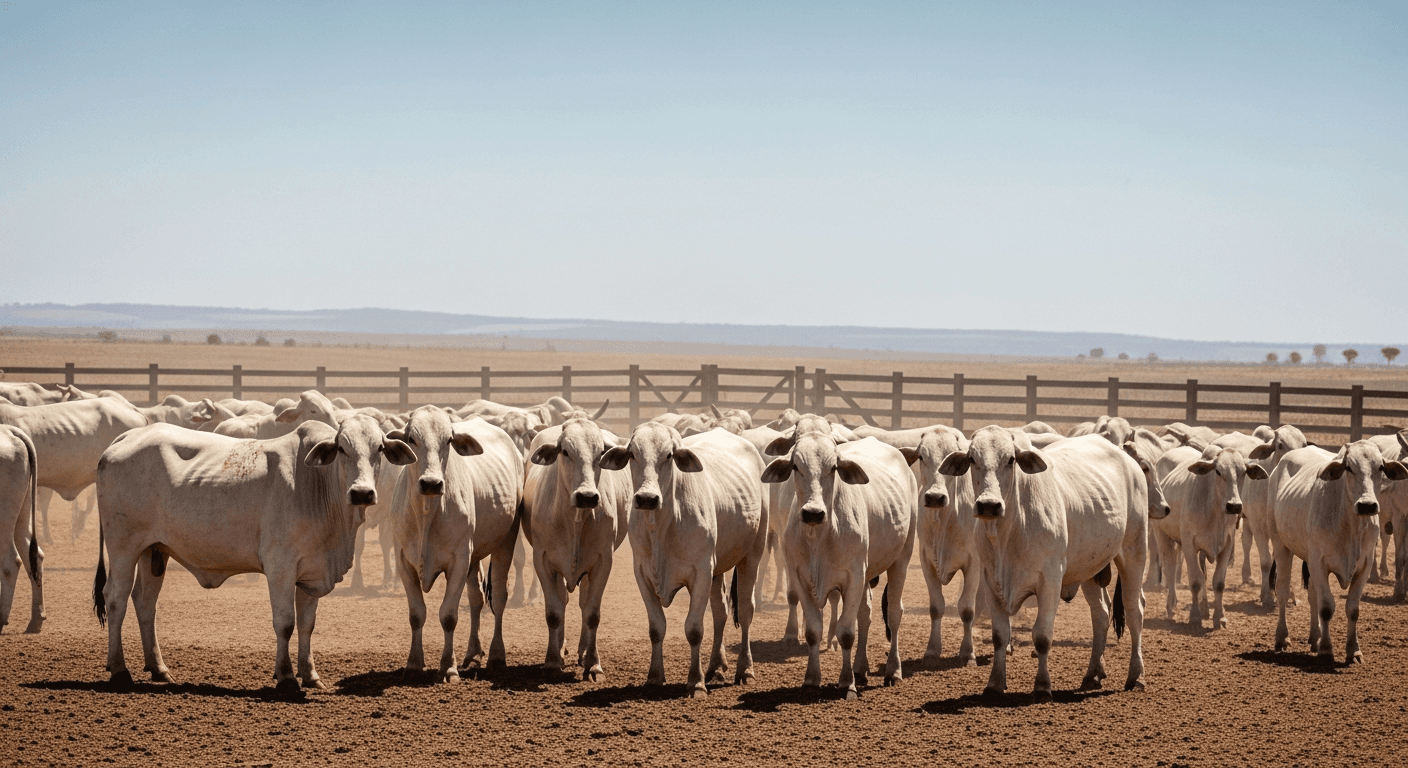
The price of Brazilian fat cattle (boi gordo) remains highly resilient, holding firm at R$344.00 per arroba (30-day term, São Paulo) as of late July 2026. This stable trend persists despite a seasonally calm start to the week and follows a series of consecutive upward price adjustments. The firm pricing is driven by a restricted supply of slaughter-ready animals and strong resistance from cattle ranchers to negotiate lower rates, keeping pressure on the margins of meatpackers heavily exposed to the domestic market.
This supply-demand imbalance is further exacerbated by severe dry weather across key agricultural regions. Live meteorological data shows zero rainfall over the last seven days in major hubs like Luís Eduardo Magalhães-BA and Rio Verde-GO, both recording 7 dry days. While Cascavel-PR received 17.0 mm of rain, Sorriso-MT saw a mere 1.4 mm, maintaining arid conditions that limit pasture quality and force producers to hold onto their herds, reinforcing the price floor.
The persistent high cost of raw materials directly impacts the operational margins of major players in Brazil agribusiness. Companies focused on domestic distribution are feeling the squeeze more acutely than diversified global exporters. On the B3 stock exchange, traders are closely monitoring meatpacking giants JBS (JBSS3), Marfrig (MRFG3), and Minerva (BEEF3). For international investors tracking these equities via the Brazil ETF (EWZ) or trading the USD BRL currency pair, the capacity of these companies to pass on rising cattle costs to consumers remains a critical focal point.
Looking ahead, market participants will monitor whether the current price level of R$344.00 per arroba triggers a demand pullback in the domestic retail market or if export demand—particularly the premium "boi-China" category—will continue to support these elevated levels. Additionally, global commodities traders are keeping an eye on broader agricultural sentiment, with COT positioning showing net long positions of 182,923 for soybeans, 492,996 for corn, and 52,395 for coffee, reflecting a highly active macro environment for Brazilian softs.