
Brazil Agribusiness: Dry Spell in Soy Belt Raises Crop Risks
A severe dry spell across Brazil's key soybean regions is raising crop-stress risks, threatening supply and catching the attention of global commodity traders.
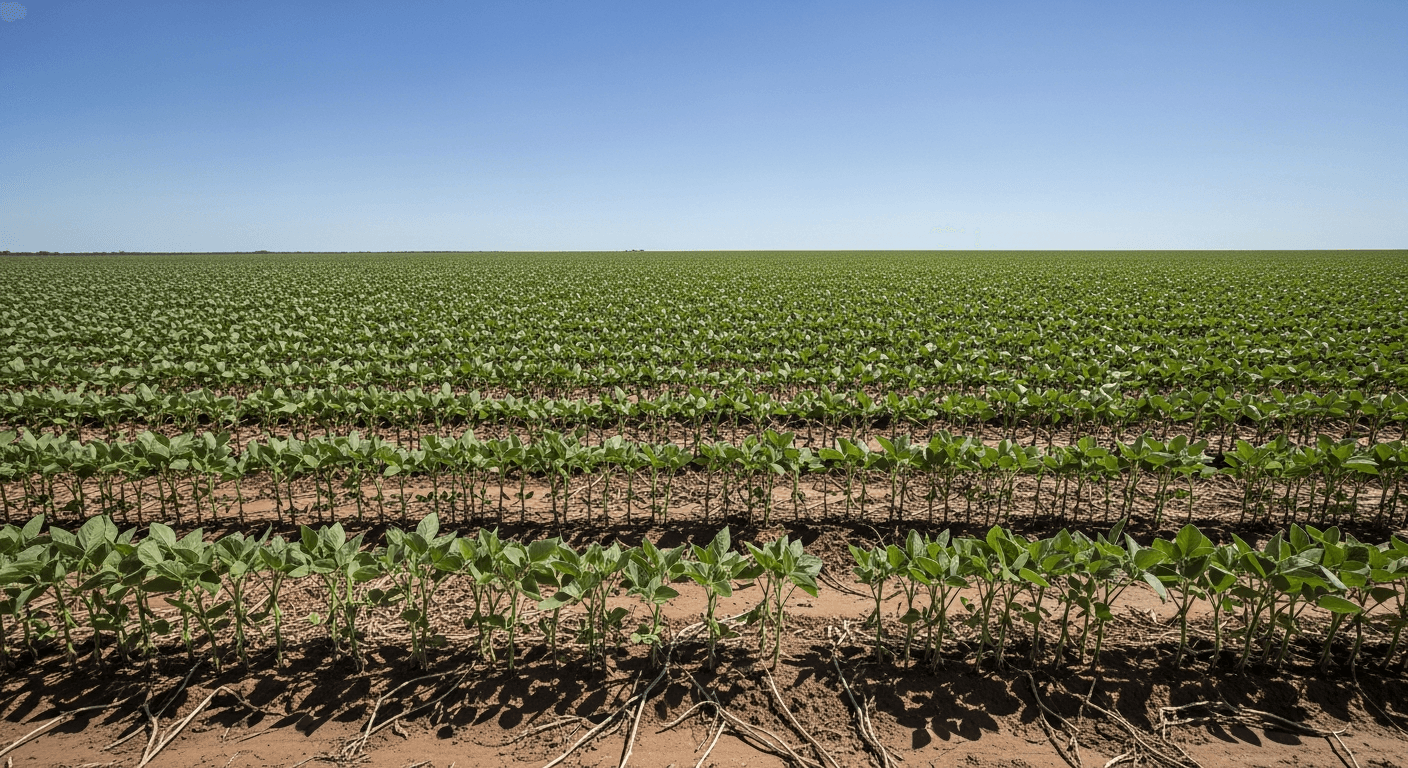
A persistent dry spell across Brazil's primary agricultural heartland is raising the risk of severe crop stress, threatening to tighten global supplies and lift commodity prices. In key regions of the country's soybean belt, including Rio Verde (Goiás), Sorriso (Mato Grosso), and Luís Eduardo Magalhães (Bahia), weather stations have registered seven consecutive dry days with virtually zero precipitation.
According to the latest meteorological data, Rio Verde-GO recorded just 0.2 mm of rain over the last seven days, while both Sorriso-MT and Luís Eduardo Magalhães-BA registered 0.0 mm of rainfall during the same period. This prolonged dryness contrasts sharply with southern regions like Cascavel (Paraná), which received 33.5 mm of rain with only four dry days. The dry conditions come at a critical time as Rabobank recently projected Brazil’s 2026/27 soybean crop to fall 2% to 178 million metric tons due to a pause in acreage growth and challenging market conditions.
For global investors tracking Brazil agribusiness, these localized weather anomalies are critical. Prolonged water stress in these high-producing regions can cap yield potential, directly impacting the bottom line of major agricultural exporters and influencing the broader Brazilian real forecast. Traders are monitoring the USD/BRL currency pair and the MSCI Brazil ETF (EWZ) for signs of macroeconomic shifts, as agricultural exports remain a cornerstone of the country's trade balance.
In the derivatives markets, positioning remains highly active. The latest Commitment of Traders (COT) report shows soybean speculative positions standing at 20,018 longs versus 1,139 shorts. Meanwhile, COT data for corn shows 482,223 longs to 350,760 shorts, and coffee stands at 53,913 longs to 26,086 shorts. If the dry weather persists into the upcoming planting window, further supply concerns could trigger volatility across agricultural futures and Brazilian equities.