
Brazil Agribusiness Closes Gap to Overtake US in Exports
Driven by record shipments to China, Brazil's agricultural exports hit $87 billion in H1 2026, putting it on the verge of permanently displacing the US.
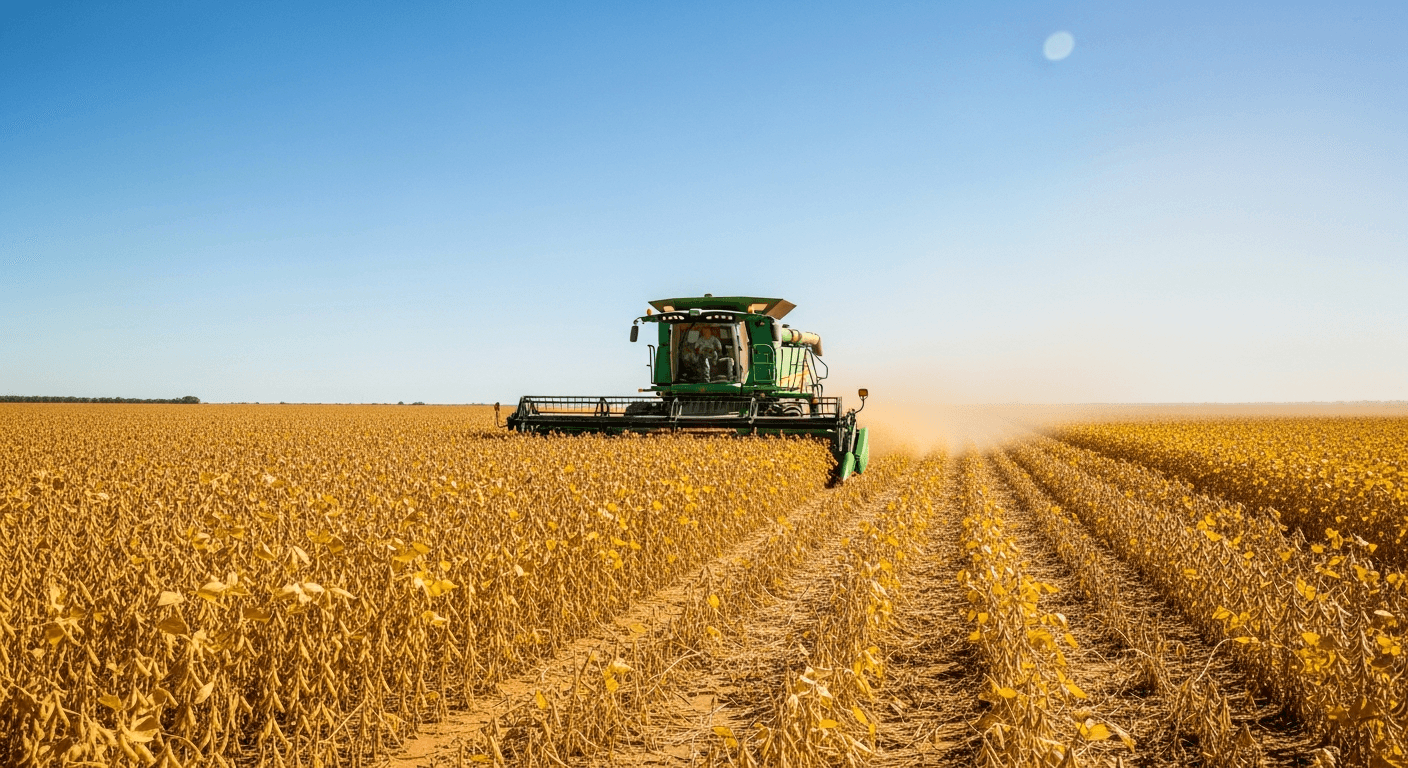
Brazil is on the verge of permanently displacing the United States as the world's dominant agricultural exporter, driven by record-breaking cotton, soybean, and grain shipments to China. According to official data from the U.S. Department of Agriculture and Brazil's Agriculture Ministry, the export gap between the two agricultural powerhouses shrank from $56 billion in 2021 to just $2 billion in 2025. In 2025, U.S. agricultural exports totaled $171 billion compared to Brazil's $169 billion.
The momentum has carried directly into this year, with Brazil agribusiness posting a 6% year-on-year increase in agricultural exports during the first half of 2026, reaching a record $87 billion. This surge is heavily supported by China's shifting trade preferences amid ongoing trade tensions with Washington, driving massive demand for South American commodities. For global investors tracking the Brazil ETF (EWZ) and agricultural commodities like the Teucrium Soybean Fund (SOYB), this structural shift is fundamentally altering global trade flows.
While Brazil's export volumes continue to break records, local weather conditions present localized challenges for the upcoming crop cycle. In the key agricultural hub of Cascavel-PR, recent data shows 66.1mm of rain over the last 7 days with 4 dry days. Meanwhile, persistent dryness continues in other major farming regions, with Luís Eduardo Magalhães-BA, Rio Verde-GO, and Sorriso-MT all reporting 0.0mm of rain and 7 dry days over the same period.
Despite these localized weather variations, speculative positioning remains highly active. In the futures markets, the Commitment of Traders (COT) soybean report shows non-commercial positions at 20,018 longs versus 1,139 shorts. For corn, COT positions stand at 482,223 longs and 350,760 shorts, while coffee shows 53,913 longs against 26,086 shorts.
As Brazil cements its crown as the dominant global food supplier, the macroeconomic implications are reverberating through the Brazilian real forecast and the broader B3 stocks. The expanding trade surplus continues to support the local currency, keeping global macro traders highly focused on the USD BRL exchange rate and the performance of the Ibovespa today.