
Batista Brothers Solidify Control, Aggressive Global Expansion as JBS Lands on NYSE
The full return of Wesley and Joesley Batista to JBS’s helm signals aggressive expansion, particularly in Asia, but reignites investor concerns over corporate governance risk.
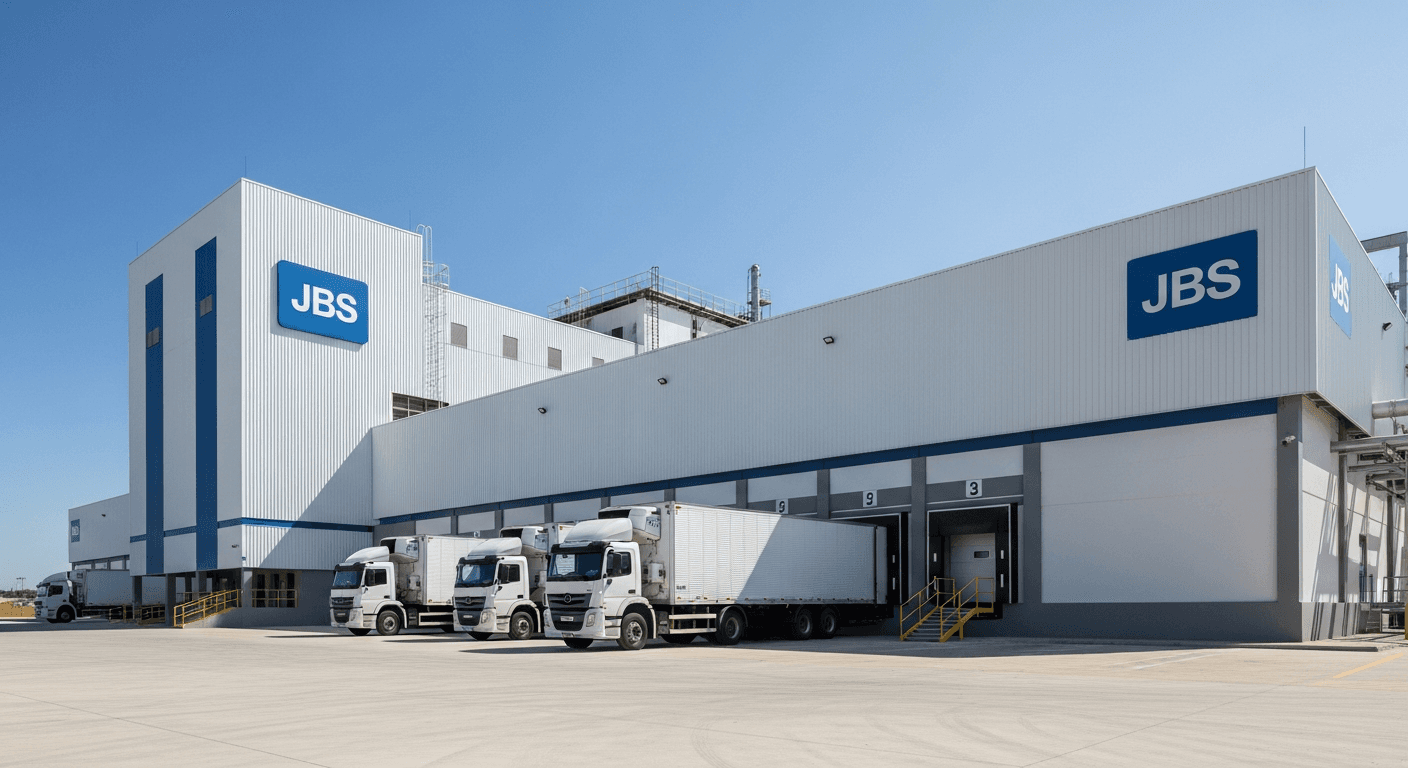
The controllers of JBS, the world’s largest meatpacker, have cemented their full corporate and diplomatic rehabilitation, signaling an aggressive new phase of global expansion only a few years after being embroiled in Brazil’s largest corruption scandal. Wesley and Joesley Batista, whose combined fortune has recovered to an estimated US$10.8 billion, have not only rejoined the board of the now-NYSE-listed JBS but now hold the titles of Board President and Vice-President, respectively, of the Brazilian operating entity. Their return comes after the Brazilian Securities and Exchange Commission (CVM) formally acquitted them of insider trading charges in late 2023, a decision that clears a major legal hurdle ahead of the company's high-profile global growth push.
The mechanism underpinning this corporate comeback and the aggressive outlook is JBS’s successful dual listing on the New York Stock Exchange (NYSE) in June 2025, a move designed to unlock shareholder value and better align the company’s capital structure with its vast international operations. The strategy is already manifesting in hard numbers, with the company securing a massive US$5 billion expansion into the crucial Asian market. This August, JBS announced a strategic joint venture with Indonesia’s sovereign wealth fund, involving an initial US$2.5 billion commitment to acquire and develop protein production in Southeast Asia, Australia, and New Zealand, with the potential to raise an additional US$2.5 billion in debt.
For foreign investors in JBS (NYSE) and its Brazilian counterpart, JBS3 (BVMF), the Batistas’ full-scale return presents a classic tension: proven execution capability versus outsized corporate governance risk. The brothers’ aggressive, debt-fueled global expansion strategy is what transformed a butcher shop in Goiás into a global protein behemoth, but their prior conviction for corruption involved admitting to bribing over 1,800 politicians. Their renewed influence in political circles is already visible, highlighted by Wesley Batista's high-level diplomatic appearances alongside President Luiz Inacio Lula da Silva in 2025. While their legal battles in Brazil appear resolved, the family’s direct control over the company’s destiny raises questions for minority shareholders accustomed to stringent U.S. governance standards, even under the new holding company structure (JBS N.V.).
The current live data of the Brazilian Real, trading at 5.0902 per US Dollar, reflects the currency’s relative stability, providing a favorable backdrop for JBS to manage the cross-border financial risks inherent in its global operation, which spans from cattle in Mato Grosso—where the city of Sorriso has seen seven dry days—to new markets in Indonesia. What investors will watch next is the execution of the $5 billion Asian strategy, which hinges on leveraging JBS’s Australian assets to capture the rapidly growing demand for animal protein in Southeast Asia, a region with a population of over 745 million people. The success of this expansion will be the ultimate barometer of whether the Batistas’ return is a net positive for shareholder value or a renewed source of political and operational volatility.
What it touches The return of the controllers is directly tied to the shares of JBS on the New York Stock Exchange (JBS) and its BDRs on the São Paulo Stock Exchange (JBSS32), with the aggressive expansion strategy designed to boost the global profile of the company, the world’s largest animal protein producer.